New York Printing and Sign Company Insurance
See How We're Different:
or Call Us: 212-425-8150
Most Common Business Policies
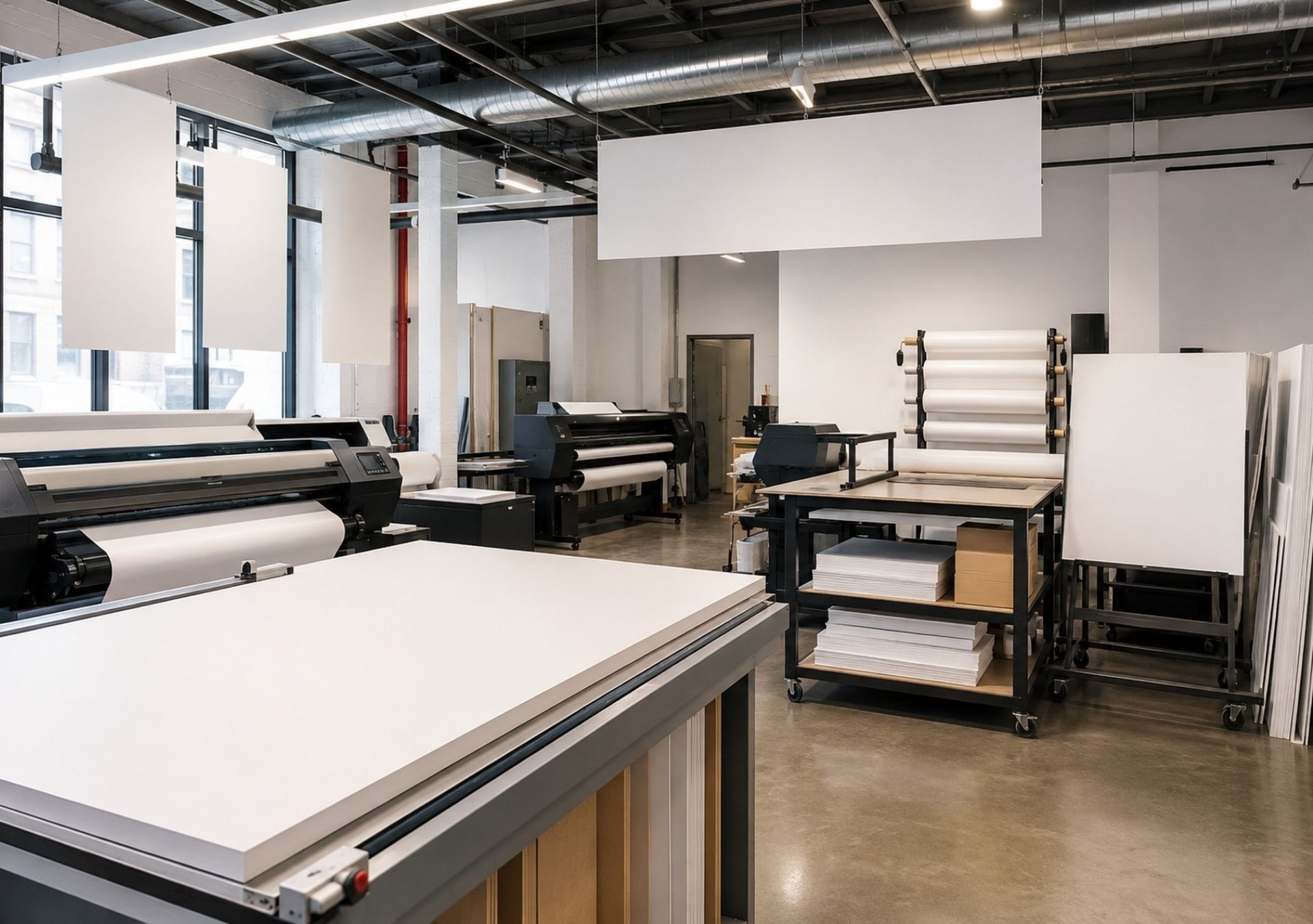
Running a printing or sign company in New York means dealing with heavy equipment, volatile materials, tight deadlines, and client expectations that leave zero room for error. A single workplace injury or a botched installation can drain your business account faster than a slow quarter ever could. The stakes are higher here than in most states, too. New York's labor laws and insurance regulations carry teeth, and the penalties for non-compliance aren't gentle warnings.
Getting the right
insurance coverage for your New York printing and sign business doesn't have to feel like decoding a legal textbook. The trick is understanding which policies actually protect your operation, which ones the state requires, and where the gaps tend to hide. Whether you run a small screen-printing studio in Brooklyn or a large-format sign shop on Long Island, you need a plan that matches your real risks, not a generic package built for a different industry. This guide breaks down the coverage types, legal obligations, and cost factors that matter most for shops like yours.
Essential Insurance for the New York Printing Industry
Your insurance needs depend on what you produce, how you produce it, and who you produce it for. A shop running digital presses faces different exposures than one fabricating illuminated channel letters for storefronts. That said, a few core policies form the foundation for nearly every printing and sign operation in the state.
General Liability for Shops and Studios
General liability insurance is the first line of defense against third-party claims. If a client visits your shop and trips over a pallet of vinyl rolls, or if a finished sign falls and injures a pedestrian, this policy covers bodily injury and property damage claims. It also handles advertising injury, which matters if a competitor accuses you of copying their design in a printed piece.
New York printing operations are primarily classified under Code 4299, covering lithography, silk screen by machine, and rubber stamp manufacturing. Your classification code affects your premium because it tells insurers how risky your operation is. A shop doing mostly paper printing pays less than one fabricating and installing exterior signage. General liability premiums for small printing businesses often range from $30 to $80 per month, though your actual cost depends on revenue, location, and claims history.
Commercial Property and Equipment Protection
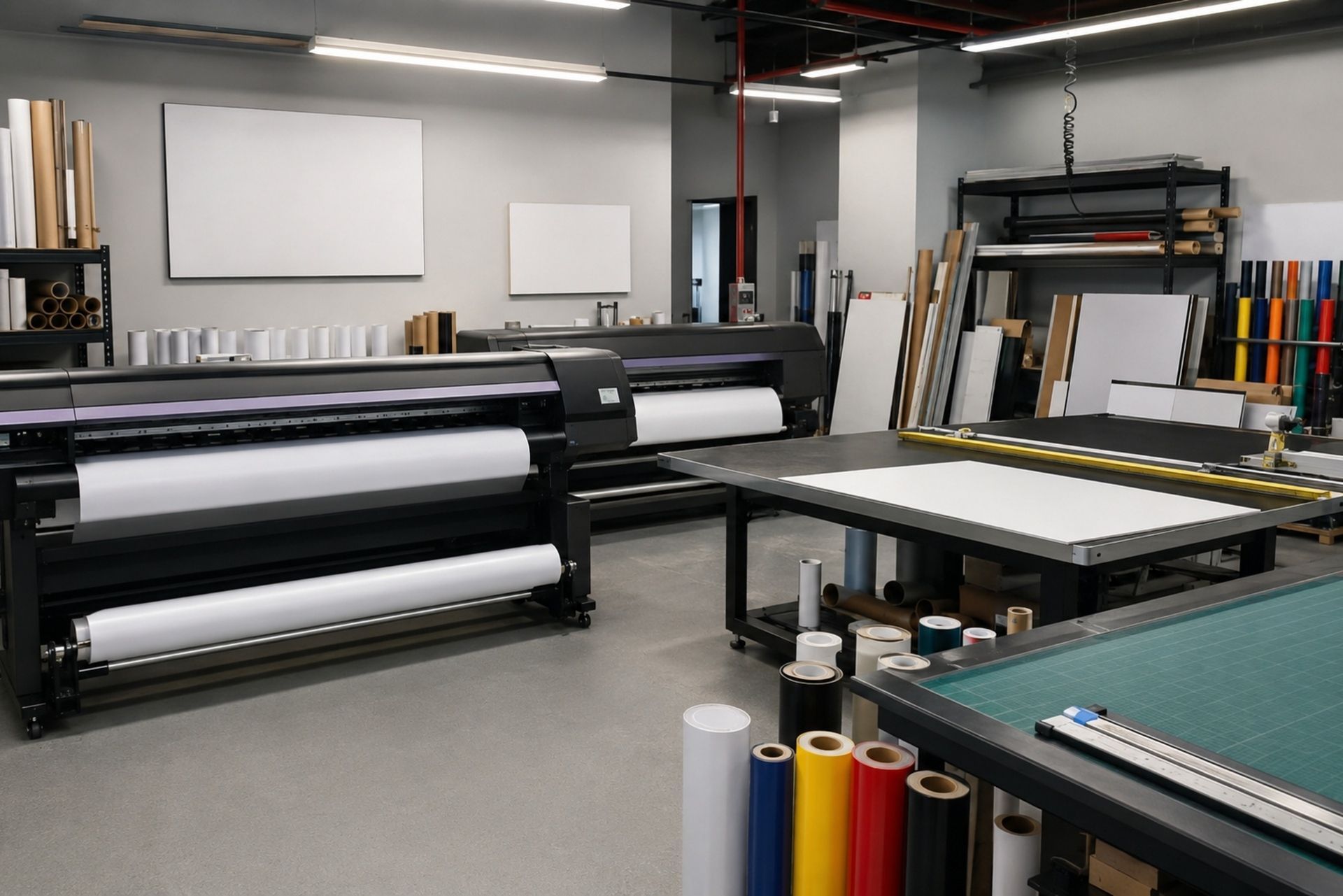
Printing and sign-making equipment isn't cheap. A single wide-format printer can cost $15,000 to $100,000, and CNC routers, laminators, and heat presses add up quickly. Commercial property insurance covers your building (if you own it), your equipment, inventory, and finished products waiting for pickup or delivery.
Pay attention to the valuation method your policy uses. Replacement cost coverage pays what it costs to buy new equipment. Actual cash value deducts depreciation, which means you'd get far less for a five-year-old printer than you paid for it. For shops in flood-prone areas of New York City or along the Hudson Valley, standard property policies won't cover flood damage. You'll need a separate flood policy through FEMA's National Flood Insurance Program or a private carrier.
Professional Liability for Graphic Design Errors
If your shop offers design services alongside printing, professional liability (sometimes called errors and omissions insurance) protects you from claims tied to your creative work. Imagine printing 50,000 brochures with the wrong phone number because your designer misread the client's proof approval. The client demands a reprint and compensation for lost business. Your general liability policy won't cover that, because it's a professional mistake, not physical damage.
This coverage also applies if you accidentally use a copyrighted image in a client's project or if a design error leads to regulatory trouble for the client. Shops that handle large commercial accounts or government contracts face the most exposure here.
New York State Legal Requirements
New York is one of the strictest states for employer insurance obligations. Failing to carry required coverage isn't just risky; it's a criminal offense that can result in fines of up to $2,000 per 10-day period of non-compliance.
Workers' Compensation for Shop Employees
Every New York employer with one or more employees must carry workers' compensation insurance. There are no exceptions based on business size, number of hours worked, or job type. Your workers' comp premiums are calculated using your payroll and classification code, with Code 4299 applying to most printing operations.
Print shops carry real injury risks: repetitive strain from operating presses, chemical burns from solvents and inks, lacerations from cutting equipment, and back injuries from lifting heavy materials. A single workers' comp claim for a serious hand injury can easily exceed $50,000 in medical costs and lost wages. Carrying proper coverage protects both your employees and your business from catastrophic out-of-pocket expenses.
Disability and Paid Family Leave Compliance
Beyond workers' comp, New York requires employers to provide short-term disability benefits (DBL) and Paid Family Leave (PFL). DBL covers employees who can't work due to off-the-job injuries or illnesses, while PFL allows employees to take paid time off to bond with a new child, care for a seriously ill family member, or handle certain military-related needs.
As of 2026, PFL provides up to 67% of the employee's average weekly wage, capped at 67% of the statewide average weekly wage. You can purchase both DBL and PFL through the New York State Insurance Fund, a private carrier, or through self-insurance if you qualify. The cost is shared between employer and employee through payroll deductions, but the employer bears the responsibility for securing and maintaining the policy.
Comparing Basic vs. Comprehensive Coverage
Choosing between a bare-minimum approach and a broader package comes down to your risk tolerance and the size of your operation. Here's how the two approaches compare:
| Coverage Area | Basic Package | Comprehensive Package |
|---|---|---|
| General Liability | $1M per occurrence / $2M aggregate | $2M+ per occurrence with umbrella |
| Property | Building and basic equipment only | Equipment, inventory, signage in transit |
| Workers' Comp | State minimum (required) | State minimum (required) |
| Professional Liability | Not included | $1M+ for design errors |
| Commercial Auto | Personal auto only | Fleet coverage for delivery/install vans |
| Business Interruption | Not included | Covers lost income during shutdowns |
| Inland Marine | Not included | Covers materials and signs in transit |
A basic package might work for a one-person screen-printing operation with no employees and no delivery vehicles. But the moment you hire staff, transport finished signs, or take on clients with contracts requiring proof of insurance, the gaps in a basic plan become liabilities. Most mid-size New York shops need at least general liability, property, workers' comp, and commercial auto to operate safely.
Specific Risks for Sign Installers
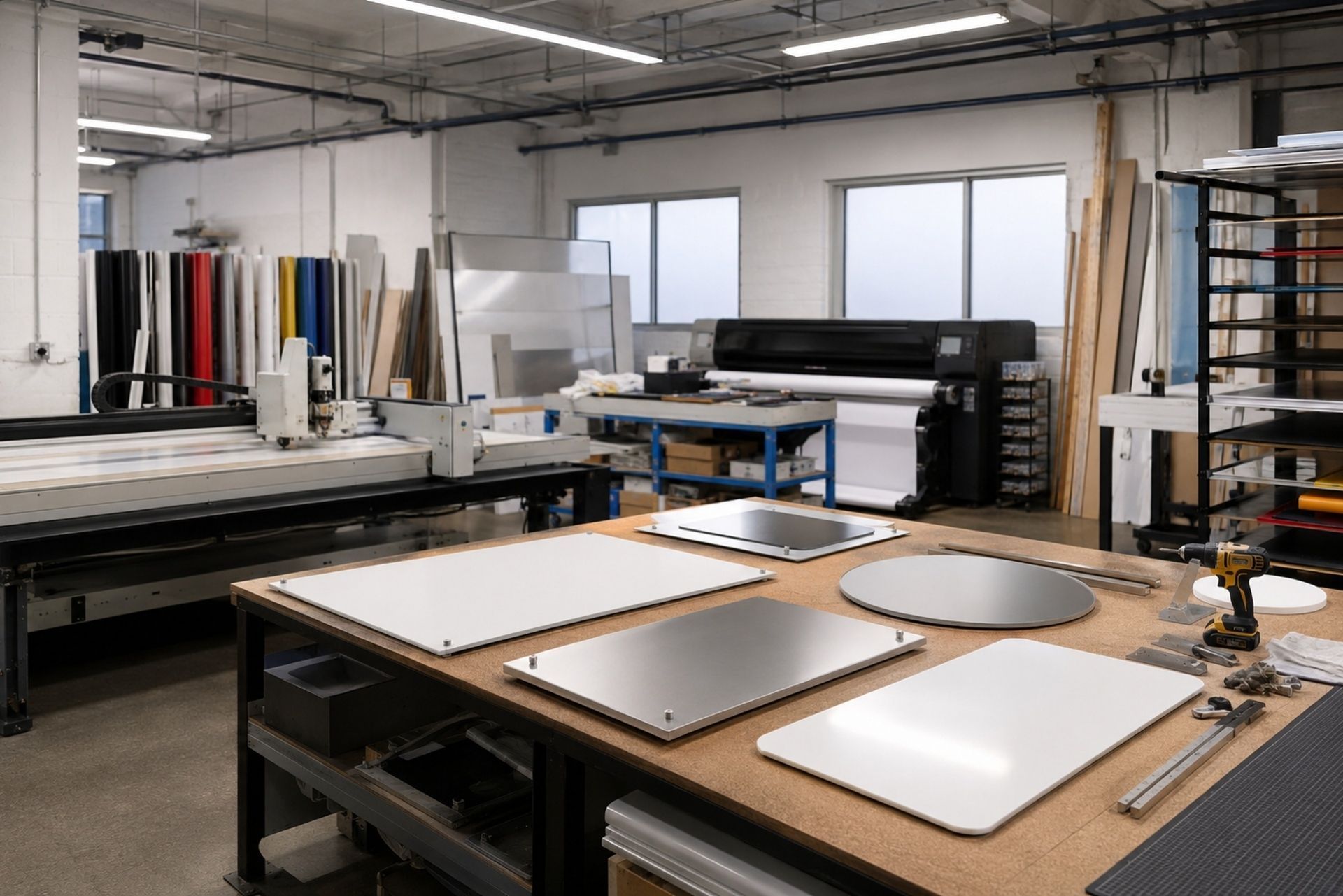
Sign companies that handle installation face a different risk profile than shops that only print. The moment your crew leaves the shop with ladders, lifts, and power tools, your exposure multiplies.
Installation Liability and Public Safety
New York's Labor Law Section 240, often called the Scaffold Law, imposes absolute liability on property owners and contractors for gravity-related injuries on job sites. If your installer falls from a ladder while mounting a sign on a building facade, the building owner and your company can be held liable regardless of fault. Verdicts under this law have reached billions in cumulative construction-related payouts across the state, and sign installation crews aren't exempt.
This means your general liability limits need to be high enough to absorb a serious claim. Many sign companies carry umbrella policies of $2M to $5M specifically because of Scaffold Law exposure. The true cost of NYC's Scaffold Law extends beyond individual claims, driving up insurance premiums for any business performing elevated work in the city.
Commercial Auto for Delivery and Service Vans
If you own or lease vehicles for delivering signs or transporting installation crews, personal auto insurance won't cover accidents that happen during business use. Commercial auto insurance covers your vehicles, your employees driving them, and liability for damage they cause to others.
Sign company vans often carry expensive cargo: channel letters, LED modules, aluminum panels, and tools. Inland marine insurance (sometimes called "goods in transit" coverage) fills the gap that commercial auto leaves, covering the value of materials and finished products while they're on the road. A single rear-end collision that destroys $20,000 worth of custom signage is a painful lesson if you're uninsured for it. Sign installation vehicles classified under
Code 9552 carry higher premiums due to the elevated risk associated with transporting and installing heavy materials.
Common Questions About Printing and Sign Insurance
How much does general liability cost for a small print shop in New York? Most small printing businesses pay between $30 and $80 per month for general liability. Your exact premium depends on your revenue, number of employees, and whether you also do installation work.
Do I need insurance if I'm a sole proprietor with no employees? You're not required to carry workers' comp if you have no employees, but general liability and property insurance are still smart investments. One client lawsuit or equipment fire could wipe out your savings.
Does my policy cover damage to a client's artwork or files? Standard general liability doesn't cover professional mistakes. You'd need professional liability (E&O) insurance to protect against claims related to lost files, design errors, or missed deadlines.
What's the difference between general liability and professional liability? General liability covers physical injuries and property damage. Professional liability covers financial losses caused by your professional services or advice, like a misprint that costs your client a product launch.
Can I bundle my policies to save money? Yes. A Business Owner's Policy (BOP) bundles general liability and commercial property at a lower rate than buying them separately. You can often add inland marine and business interruption coverage to a BOP as well.
Are sign installers classified differently than print shop workers?
Yes. Sign installation carries its own classification codes and higher premiums because of the physical risks involved, especially in New York where the Scaffold Law increases liability exposure.
Making the Right Choice for Your Shop
The right insurance setup for your printing or sign company isn't about buying every policy available. It's about matching your coverage to your actual operations and the risks specific to your corner of New York's market. A Manhattan-based design and print studio has different needs than a sign fabrication and installation company in Buffalo.
Start by listing your real exposures: equipment value, number of employees, whether you do installations, whether you deliver finished products, and the size of your typical client contracts. Then work with a broker who understands New York's requirements for printing and sign businesses. Ask about classification codes, because being placed in the wrong code can mean overpaying by thousands per year.
Don't wait for a claim to discover your gaps. Review your policies annually, especially if you've added services, hired staff, or started taking on larger projects. Making insurance simple for your New York sign or print shop means building a plan you actually understand, with coverage limits that reflect the real financial risk of what you do every day.
ABOUT THE AUTHOR:
JELANI FENTON
As Owner of EG Bowman, I’m dedicated to continuing a legacy of trust and excellence built over more than seven decades. My focus is on helping businesses and individuals secure reliable, forward-thinking insurance solutions that protect their assets and support long-term growth.
Contact Us
OUR SERVICES
New York Business Insurance Coverage
General Liability Insurance


Workers Comp Insurance
Commercial Property Insurance
Commercial Auto Insurance
Commercial Umbrella Insurance
Business Owner's Policy
OUR SERVICES
New York Personal Insurance Coverage
Auto Insurance
Get coverage for your car and protect yourself on the road. We provide options for accidents, damages, and more.
Home Insurance
Protect your home and belongings with coverage for damages, theft, and unexpected events.
Umbrella Insurance
Extend your coverage with umbrella insurance for extra protection when you need it most.
Condo Insurance
Get peace of mind with condo insurance that protects your space and personal belongings.
NEW YORK BUSINESSES WE WORK WITH
Industries We Serve In New York
Electrician Insurance
Get coverage that protects electricians from accidents, property damage, and liability risks. Keep your tools, equipment, and business safe with plans designed for your needs. Request a quote to stay covered and focused on your work.
Real Estate Developer Insurance
Protect your projects with insurance that covers construction risks, liability, and property damage. We offer plans to keep your developments secure and on track. Get a quote to ensure your business is protected.
Wholesaler and Distributor Insurance
Protect your inventory and business operations with insurance that covers property damage and liability risks. Keep your supply chain running without disruptions. Get a quote to safeguard your business today.
What is an independent insurance agency, and how does it differ from a traditional insurance company?
An independent insurance agency works with multiple insurance carriers instead of just one. This allows us to provide customized coverage options tailored to your needs, rather than offering a one-size-fits-all policy. Independent agencies focus on finding the best value and coverage for their clients by comparing policies across various providers. At EG Bowman, we pride ourselves on offering personalized service and expertise to ensure our clients get the coverage that fits their specific needs.
What types of insurance does EG Bowman offer?
EG Bowman offers a wide range of insurance solutions, including commercial insurance, personal lines, property insurance, liability insurance, and specialized policies tailored to niche industries. Our focus is on protecting businesses and individuals from unforeseen risks. Whether you're looking for coverage for your home, car, or business, our team works to provide the most comprehensive and competitive options available. We’re here to make sure you’re prepared for the unexpected.
How does EG Bowman help businesses with insurance?
We specialize in understanding the unique risks businesses face and crafting insurance solutions to address them. From general liability to workers' compensation and industry-specific policies, our team ensures your business is protected at every level. We also provide risk management consultations to identify potential vulnerabilities and recommend solutions. With decades of experience, EG Bowman acts as a trusted partner, helping businesses navigate their insurance needs confidently.
Why should I choose EG Bowman as my insurance agency?
At EG Bowman, we combine decades of expertise with a client-focused approach to provide unparalleled service. Unlike larger, faceless companies, we build long-term relationships with our clients, offering personalized advice and solutions. We prioritize your needs, shop for the best rates, and advocate on your behalf when it comes to claims. Our goal is to be your trusted advisor in navigating insurance complexities and ensuring peace of mind.
How can I get a quote for insurance through EG Bowman?
Getting a quote with EG Bowman is simple and hassle-free. You can call us directly at 212-425-8150 or email us at info@egbowman.com to discuss your insurance needs. Our team will gather information about your situation and compare policies from multiple carriers to provide the best options. Whether it’s personal or business insurance, we ensure the process is transparent, efficient, and tailored to you.
Does EG Bowman offer insurance for small businesses?
Yes, EG Bowman specializes in working with small businesses. We understand the unique challenges small businesses face, from managing risks to staying within budget. Our insurance solutions cover everything from general liability to property insurance and more. By tailoring policies to fit your specific needs, we ensure your small business is well-protected while keeping costs manageable.
FAQS PAGE
Frequently Asked Questions
We understand you may have questions about our insurance services and how we can help protect what matters most to you. Below, you'll find answers to some of the most common questions we receive. If you don’t see the information you’re looking for, feel free to reach out to us directly. Our team is here to assist you with personalized advice and solutions.
NEWS & BLOG
Explore Our New York Insurance Blog



Contact Us