New York Elevator Contractor Insurance
See How We're Different:
or Call Us: 212-425-8150
Most Common Business Policies
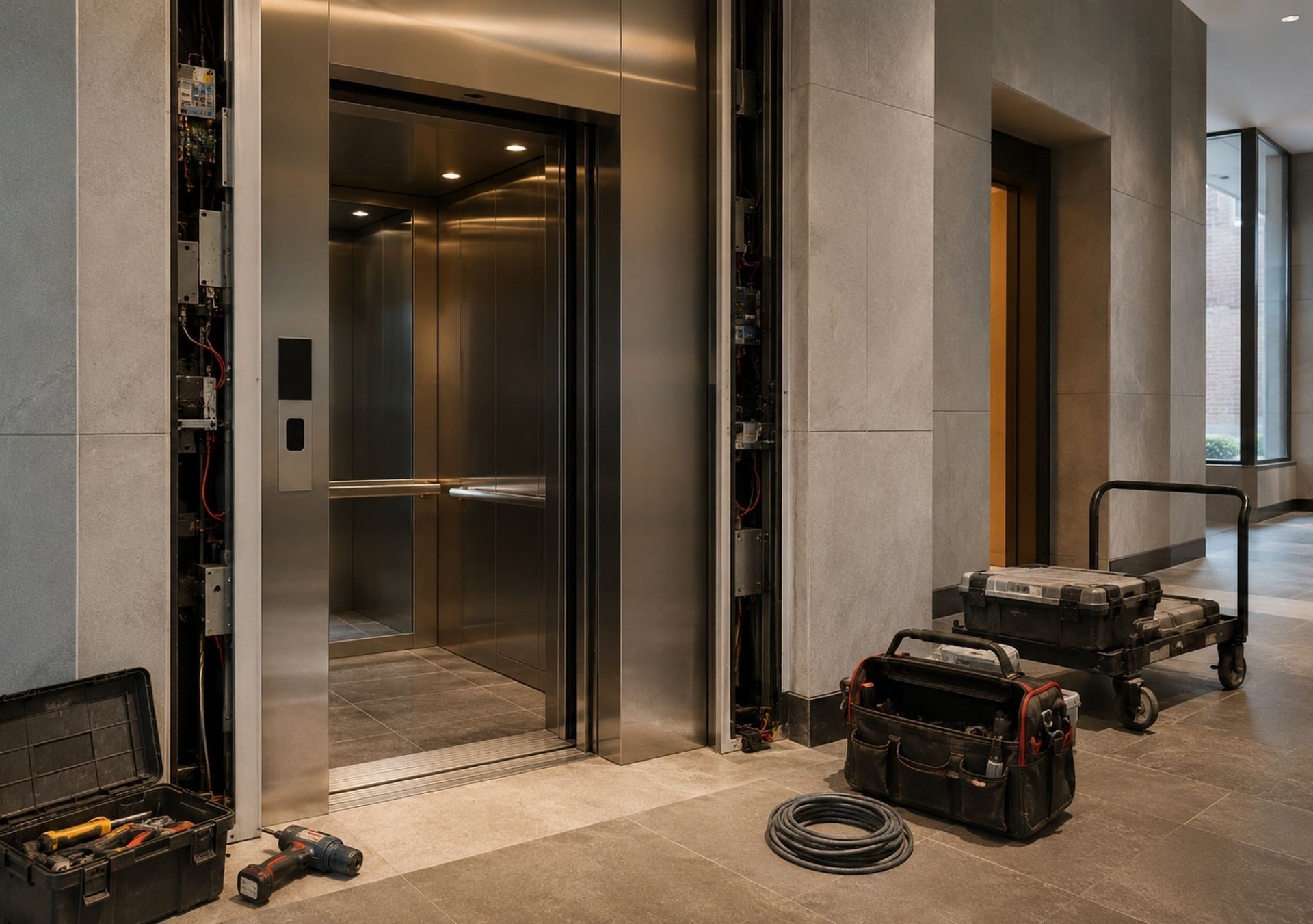
Running an elevator contracting business in New York means carrying some of the highest insurance costs in the country. Between the state's strict licensing laws, New York City's Department of Buildings requirements, and the ever-present threat of Labor Law §240 claims, your insurance portfolio isn't just a checkbox: it's the backbone of your ability to operate. Construction insurance premiums
jumped roughly 15% in 2026, and
elevator contractors are feeling the squeeze more than most trades. Whether you're installing new units in a Manhattan high-rise or maintaining freight elevators upstate, understanding exactly what coverage you need, and why, can save you from catastrophic financial exposure. This guide breaks down the insurance requirements for elevator contractors in New York, from mandatory state minimums to NYC-specific filing rules, so you can protect your license, your crew, and your bottom line.
Core Insurance Requirements for New York Elevator Contractors
New York State requires elevator contractors to hold an active license through the Department of Labor, and insurance is a non-negotiable part of that process. The DOL's elevator licensing program mandates proof of both general liability and workers' compensation before you can legally perform installations, repairs, or inspections. Failing to maintain continuous coverage can result in license suspension, fines, or both.
Your insurance package needs to cover three primary areas: third-party bodily injury and property damage, employee injuries, and professional errors. Each of these carries distinct policy structures, limits, and endorsements that differ from a typical general contractor's setup.
General Liability and Property Damage Limits
Most general contractors in New York carry $1 million per occurrence and $2 million aggregate in commercial general liability (CGL). Elevator contractors, though, often face pressure from building owners and general contractors to carry higher limits, sometimes $5 million or more, especially on commercial projects.
Your CGL policy covers third-party bodily injury and property damage. Picture a scenario where a technician accidentally damages a building's electrical system during a modernization project, causing a tenant's server room to go offline. That property damage claim can hit six figures fast. Make sure your policy doesn't exclude work performed in elevator shafts or hoistways, as some standard forms do.
Workers' Compensation and Disability Insurance
New York requires workers' compensation for virtually every employer, with no exceptions for small crews. You also need New York State disability benefits (DBL) and paid family leave (PFL) coverage. These aren't optional add-ons: they're state-mandated.
Elevator work carries classification codes with some of the highest workers' comp rates in construction. A single fall-from-height claim can generate six-figure medical bills and years of lost-wage payments. If you use subcontractors, verify their coverage independently. You're on the hook if an uninsured sub gets hurt on your job.
Professional Liability for Design and Inspection
If your firm handles elevator design, consulting, or periodic inspections, you need professional liability insurance (also called errors and omissions). This covers claims arising from faulty designs, missed defects during inspections, or incorrect code compliance advice.
A missed safety defect during an annual inspection that later causes a passenger injury creates a professional liability exposure, not a general liability one. Standard CGL policies exclude professional services. If you sign off on inspection reports or submit engineering drawings, a separate E&O policy is essential.
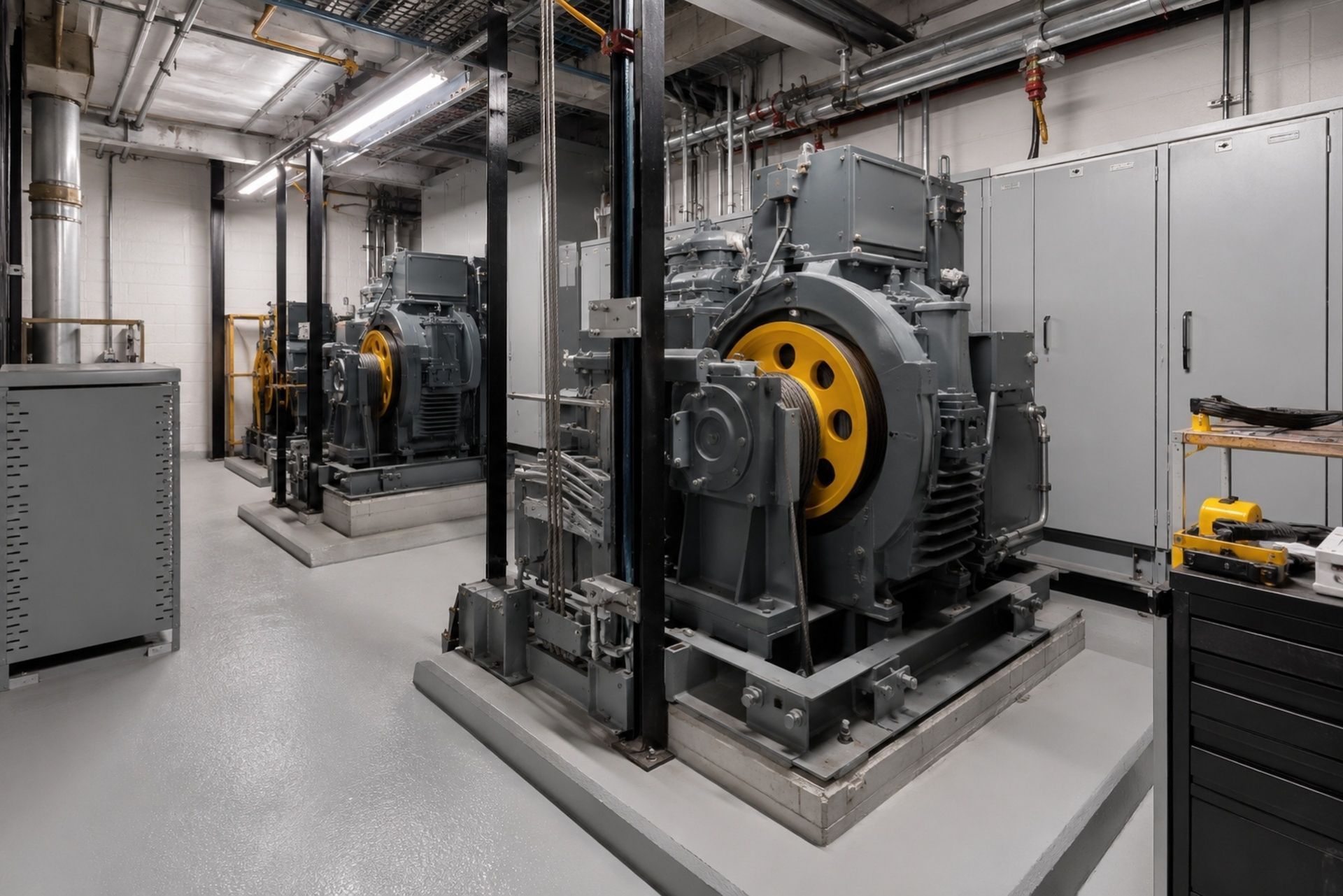
New York City adds its own layer of requirements on top of state law. The NYC Department of Buildings (DOB) regulates elevator installations and maintenance through a detailed set of rules that directly affect your insurance obligations. Operating in the five boroughs without meeting these requirements can shut your business down.
DOB Licensing and Insurance Filing
The DOB requires elevator contractors to file proof of insurance directly with the department. Your insurance carrier must submit certificates and, in many cases, endorsements naming the City of New York as a certificate holder. These filings must stay current: a lapse triggers automatic suspension of your DOB registration.
The city has also been proposing rule amendments affecting elevator maintenance and inspection standards. Staying current with these changes matters because new rules often carry new insurance implications, like expanded inspection liability or stricter maintenance documentation requirements.
Additional Insured and Waiver of Subrogation
Almost every commercial project in NYC will require you to add the building owner, property manager, and general contractor as additional insureds on your CGL policy. You'll also be asked to provide a waiver of subrogation, which prevents your insurer from going after those parties to recover claim payments.
These endorsements cost money, typically 1-3% of your premium, and they expand your policy's exposure. Review each additional insured request carefully. Some blanket additional insured endorsements only apply to your ongoing operations, not completed operations. If a building owner wants completed operations coverage, that's a separate endorsement, and it's one you'll want to negotiate.
Comparing Standard vs. High-Risk Coverage Needs
Not all elevator work carries the same risk profile. A company maintaining residential elevators in a six-story Brooklyn co-op faces different exposures than a firm installing traction elevators in a 50-story commercial tower.
| Coverage Area | Standard Risk (Residential/Low-Rise) | High-Risk (Commercial/High-Rise) |
|---|---|---|
| GL Limits | $1M/$2M | $5M/$10M or higher |
| Umbrella/Excess | $1M-$2M | $10M+ |
| Professional Liability | Often not required | Required for design-build |
| Completed Operations | Standard inclusion | Extended tail recommended |
| Pollution Liability | Rarely needed | Needed for hydraulic systems |
| Workers' Comp Mod Rate | 1.0 or below | Often above 1.0 |
High-rise commercial work typically requires umbrella policies with limits of $10 million or more. Hydraulic elevator work introduces pollution liability concerns because hydraulic fluid leaks can contaminate soil and groundwater. If you're working on both residential and commercial projects, your broker should structure your program to cover the full spectrum without leaving gaps.
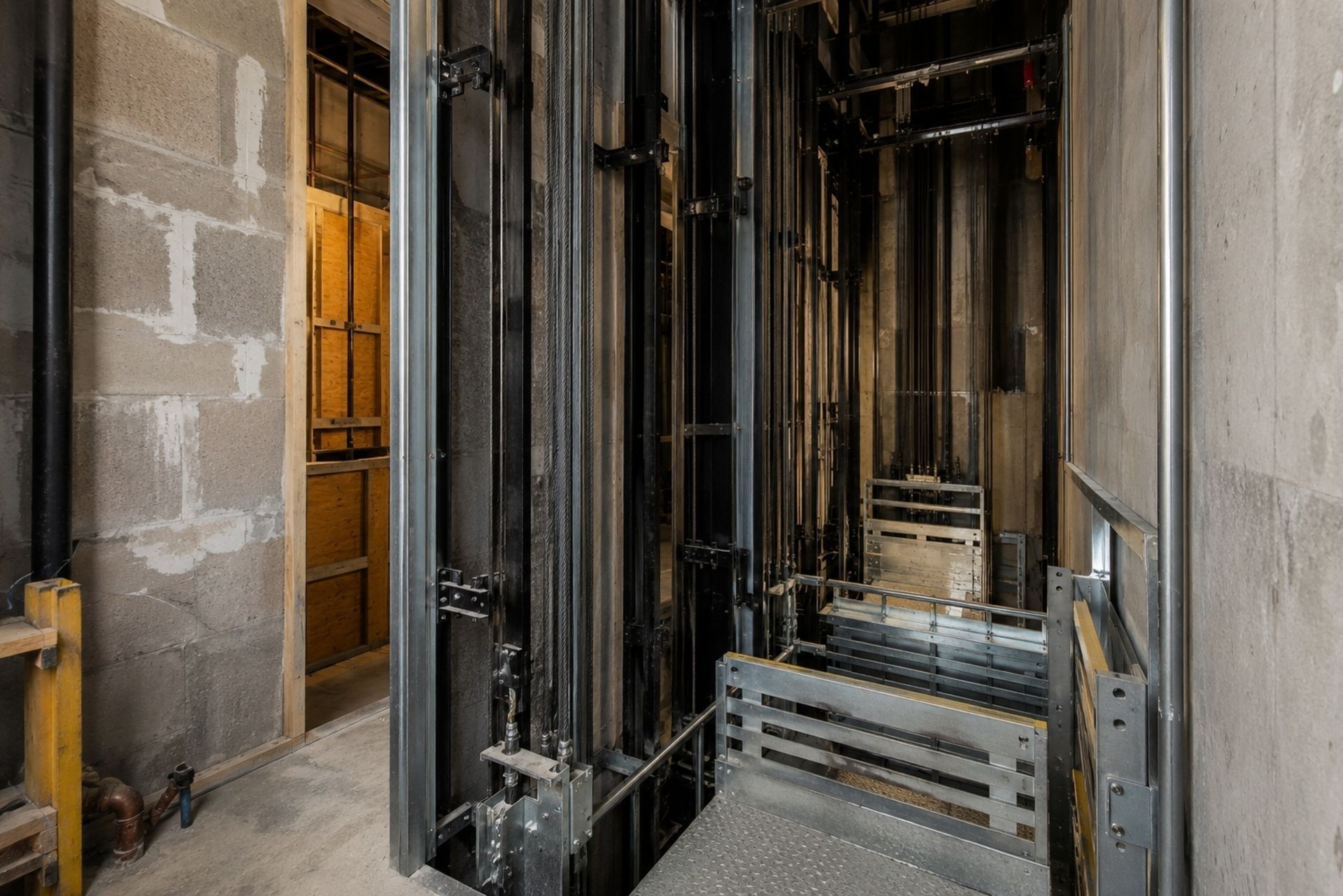
New York's Labor Law §240, commonly called the Scaffold Law, is the single biggest driver of insurance costs for elevator contractors in the state. This law imposes absolute liability on property owners and contractors for gravity-related injuries, meaning if a worker falls from a height, the owner and contractor are liable regardless of the worker's own negligence.
The law has been breaking the system it was designed to protect, driving up insurance costs across the construction industry. For elevator contractors, who routinely work in shafts, on top of cabs, and at significant heights, the exposure is constant. Scaffold Law claims regularly produce verdicts exceeding $1 million, and the trend in 2026 continues upward.
This is why your umbrella limits matter so much. A $2 million umbrella might feel adequate until a Scaffold Law verdict comes in at $4.5 million. Work with a broker who understands this exposure specifically for elevator trades.
Risk Management Factors for Elevator Technicians
Beyond buying the right policies, managing your risk profile directly affects what you pay and how well your coverage responds when you need it.
Action-Over Labor Law Exposures
An action-over claim happens when an injured employee collects workers' comp, then sues the property owner, who in turn sues you for indemnification. These claims are common in New York because of the Scaffold Law. Your CGL policy needs to respond to action-over suits, but some policies contain exclusions that limit or eliminate this coverage.
Check your policy's "employer's liability" exclusion carefully. If it includes a broad "any claim by any employee" exclusion without an action-over carve-back, you have a dangerous gap. One action-over claim from a shaft fall can easily exceed $2 million.
Completed Operations and Product Liability
Your liability doesn't end when you finish the job. If an elevator you installed malfunctions two years later and injures a passenger, completed operations coverage responds. Product liability applies if a component you supplied, like a door operator or safety brake, fails.
Many contractors let their completed operations coverage lapse after a project wraps up. That's a mistake. New York's statute of limitations for personal injury is three years, and construction defect claims can surface even later. Keep your completed operations coverage active for at least three to five years after finishing a project.
Common Questions About Elevator Insurance
How much does insurance cost for elevator contractors in New York? Annual premiums typically range from $25,000 to over $100,000, depending on your payroll, project types, claims history, and required limits. NYC contractors generally pay more than the national average due to Scaffold Law exposure.
Do I need separate insurance for maintenance contracts vs. new installations? Not necessarily separate policies, but your CGL must cover both ongoing operations and completed operations. Some policies limit coverage to one or the other, so confirm with your broker.
Can I operate in NYC with just a state elevator license? No. NYC requires a separate DOB registration with its own insurance filing requirements. Your state license alone won't authorize work in the five boroughs.
What happens if my insurance lapses? The DOL and DOB both receive cancellation notices from your carrier. A lapse can trigger immediate license or registration suspension, and you may face fines for any work performed during the gap.
Is pollution liability really necessary for elevator work? For hydraulic elevator systems, yes. A hydraulic line failure can release hundreds of gallons of oil. Cleanup and remediation costs can reach $50,000 or more, and standard CGL policies exclude pollution events.
How to Lower Your Insurance Costs Without Cutting Coverage
The 2026 construction insurance market remains tight, but there are practical ways to reduce premiums. Start with your experience modification rate (EMR): every dollar you invest in safety training and incident prevention pays dividends at renewal.
Bundling your GL, workers' comp, and umbrella with a single carrier often yields package discounts. Raising your deductibles from $1,000 to $5,000 or $10,000 per occurrence can cut premiums by 10-15%. Just make sure you can absorb that deductible on a bad month.
Document everything. Carriers reward contractors who maintain detailed safety programs, toolbox talk records, and equipment maintenance logs. A clean three-year claims history is your strongest negotiating tool at renewal.
Key Differences Between GL and Professional Liability
| Feature | General Liability (CGL) | Professional Liability (E&O) |
|---|---|---|
| Covers | Bodily injury, property damage | Errors in professional services |
| Trigger | Accident or occurrence | Negligent act, error, or omission |
| Example Claim | Dropped tool injures bystander | Missed defect during inspection |
| Policy Type | Occurrence-based (usually) | Claims-made (usually) |
| Required By | State and city law | Contract requirement (typically) |
The distinction matters because a claim that looks like a GL issue, say a malfunctioning elevator, might actually stem from a professional error during inspection. If you only carry GL, you have no coverage for the professional services component of that claim.
What Happens If You're Underinsured
Carrying minimum limits might keep your license active, but it won't protect your business from a serious claim. A single Scaffold Law verdict can exceed your policy limits, leaving you personally liable for the excess. In New York, plaintiffs' attorneys routinely pursue the contractor's personal assets when policy limits are exhausted.
Underinsurance also puts your contracts at risk. Most GCs and building owners require specific minimum limits in their contracts. If you can't meet those requirements, you lose the bid. The
insurance rate forecast for 2026 suggests premiums will continue climbing, making it tempting to reduce limits. Resist that temptation.
Building a Long-Term Risk Management Strategy
Your insurance program should evolve as your business grows. A firm doing $500,000 in annual revenue has different needs than one doing $5 million. Review your coverage annually, not just at renewal, but whenever you take on a new type of project or enter a new market.
Build relationships with brokers who specialize in construction and elevator trades. Generalist agents often miss critical endorsements or fail to negotiate favorable terms. A specialist broker understands action-over exposure, completed operations tails, and the specific DOB filing requirements that keep your NYC registration active.
Invest in formal safety programs. OSHA 30-hour training for your field supervisors, documented daily safety briefings, and regular equipment inspections all reduce your claims frequency, which directly lowers your premiums over time.
The Bottom Line for Your Business
Elevator contractor insurance in New York isn't something you set up once and forget. The combination of state licensing requirements, NYC's DOB filing rules, and the Scaffold Law's absolute liability standard creates a uniquely demanding insurance environment. Your coverage needs to address general liability, workers' comp, professional liability, and umbrella limits that can withstand seven-figure verdicts.
The contractors who thrive in this market are the ones who treat insurance as a strategic business function, not just a cost center. Work with a specialized broker, maintain a clean claims history, and review your program every year. Don't wait for a claim to discover a gap in your coverage.
If you're starting a new elevator contracting business or expanding into NYC, get your insurance program reviewed by someone who knows this trade. The cost of proper coverage is always less than the cost of being underinsured when a claim hits.
ABOUT THE AUTHOR:
JELANI FENTON
As Owner of EG Bowman, I’m dedicated to continuing a legacy of trust and excellence built over more than seven decades. My focus is on helping businesses and individuals secure reliable, forward-thinking insurance solutions that protect their assets and support long-term growth.
Contact Us
OUR SERVICES
New York Business Insurance Coverage
General Liability Insurance


Workers Comp Insurance
Commercial Property Insurance
Commercial Auto Insurance
Commercial Umbrella Insurance
Business Owner's Policy
OUR SERVICES
New York Personal Insurance Coverage
Auto Insurance
Get coverage for your car and protect yourself on the road. We provide options for accidents, damages, and more.
Home Insurance
Protect your home and belongings with coverage for damages, theft, and unexpected events.
Umbrella Insurance
Extend your coverage with umbrella insurance for extra protection when you need it most.
Condo Insurance
Get peace of mind with condo insurance that protects your space and personal belongings.
NEW YORK BUSINESSES WE WORK WITH
Industries We Serve In New York
Electrician Insurance
Get coverage that protects electricians from accidents, property damage, and liability risks. Keep your tools, equipment, and business safe with plans designed for your needs. Request a quote to stay covered and focused on your work.
Real Estate Developer Insurance
Protect your projects with insurance that covers construction risks, liability, and property damage. We offer plans to keep your developments secure and on track. Get a quote to ensure your business is protected.
Wholesaler and Distributor Insurance
Protect your inventory and business operations with insurance that covers property damage and liability risks. Keep your supply chain running without disruptions. Get a quote to safeguard your business today.
What is an independent insurance agency, and how does it differ from a traditional insurance company?
An independent insurance agency works with multiple insurance carriers instead of just one. This allows us to provide customized coverage options tailored to your needs, rather than offering a one-size-fits-all policy. Independent agencies focus on finding the best value and coverage for their clients by comparing policies across various providers. At EG Bowman, we pride ourselves on offering personalized service and expertise to ensure our clients get the coverage that fits their specific needs.
What types of insurance does EG Bowman offer?
EG Bowman offers a wide range of insurance solutions, including commercial insurance, personal lines, property insurance, liability insurance, and specialized policies tailored to niche industries. Our focus is on protecting businesses and individuals from unforeseen risks. Whether you're looking for coverage for your home, car, or business, our team works to provide the most comprehensive and competitive options available. We’re here to make sure you’re prepared for the unexpected.
How does EG Bowman help businesses with insurance?
We specialize in understanding the unique risks businesses face and crafting insurance solutions to address them. From general liability to workers' compensation and industry-specific policies, our team ensures your business is protected at every level. We also provide risk management consultations to identify potential vulnerabilities and recommend solutions. With decades of experience, EG Bowman acts as a trusted partner, helping businesses navigate their insurance needs confidently.
Why should I choose EG Bowman as my insurance agency?
At EG Bowman, we combine decades of expertise with a client-focused approach to provide unparalleled service. Unlike larger, faceless companies, we build long-term relationships with our clients, offering personalized advice and solutions. We prioritize your needs, shop for the best rates, and advocate on your behalf when it comes to claims. Our goal is to be your trusted advisor in navigating insurance complexities and ensuring peace of mind.
How can I get a quote for insurance through EG Bowman?
Getting a quote with EG Bowman is simple and hassle-free. You can call us directly at 212-425-8150 or email us at info@egbowman.com to discuss your insurance needs. Our team will gather information about your situation and compare policies from multiple carriers to provide the best options. Whether it’s personal or business insurance, we ensure the process is transparent, efficient, and tailored to you.
Does EG Bowman offer insurance for small businesses?
Yes, EG Bowman specializes in working with small businesses. We understand the unique challenges small businesses face, from managing risks to staying within budget. Our insurance solutions cover everything from general liability to property insurance and more. By tailoring policies to fit your specific needs, we ensure your small business is well-protected while keeping costs manageable.
FAQS PAGE
Frequently Asked Questions
We understand you may have questions about our insurance services and how we can help protect what matters most to you. Below, you'll find answers to some of the most common questions we receive. If you don’t see the information you’re looking for, feel free to reach out to us directly. Our team is here to assist you with personalized advice and solutions.
NEWS & BLOG
Explore Our New York Insurance Blog



Contact Us