Manhattan Small Business Insurance
See How We're Different:
or Call Us: 212-425-8150
Most Common Business Policies
Running a small business in Manhattan means dealing with some of the highest operating costs in the country, and insurance is no exception. Between sky-high rents, dense foot traffic, and strict New York State regulations, your premiums will look different from those of a similar business in Brooklyn or Queens, let alone one in a smaller city. Whether you're opening a boutique in SoHo or launching a consulting firm near Midtown, understanding what you'll actually pay for coverage is the first step toward protecting your business without overspending. This guide breaks down the real costs of
insuring a Manhattan small business in 2026, the factors that push those costs up or down, and practical ways to keep your premiums manageable.
Understanding Manhattan Small Business Insurance Pricing
Insurance pricing in Manhattan reflects the borough's unique combination of density, liability exposure, and regulatory requirements. A general liability policy for a small retail shop here can cost two to three times what the same coverage would run in upstate New York. That gap isn't random: it's driven by higher claim payouts, more expensive legal proceedings, and the sheer volume of people moving through commercial spaces every day.
New York State also requires certain coverages that other states don't, which adds to the baseline cost. Workers' compensation, disability benefits, and paid family leave insurance are all mandatory for most employers. These requirements create a floor beneath which your costs simply can't drop, regardless of how safely you run your operation.
Average Monthly Premiums for New York City Startups
A solo freelancer or consultant in Manhattan can expect to pay roughly $30 to $60 per month for a basic general liability policy. Small retail or food service businesses with a few employees typically see monthly premiums between $150 and $500, depending on the type of coverage and risk profile. New York small business insurance costs vary significantly by industry and location, with Manhattan consistently ranking at the top of the range.
Workers' comp adds another layer. A low-risk office with two or three employees might pay $100 to $200 monthly, while a construction or contracting outfit could face $500 or more. Health insurance is another growing expense: small business health premiums are projected to rise 7% to 9% heading into 2027, adding pressure to already tight budgets.
Why Manhattan Rates Differ from Other Boroughs
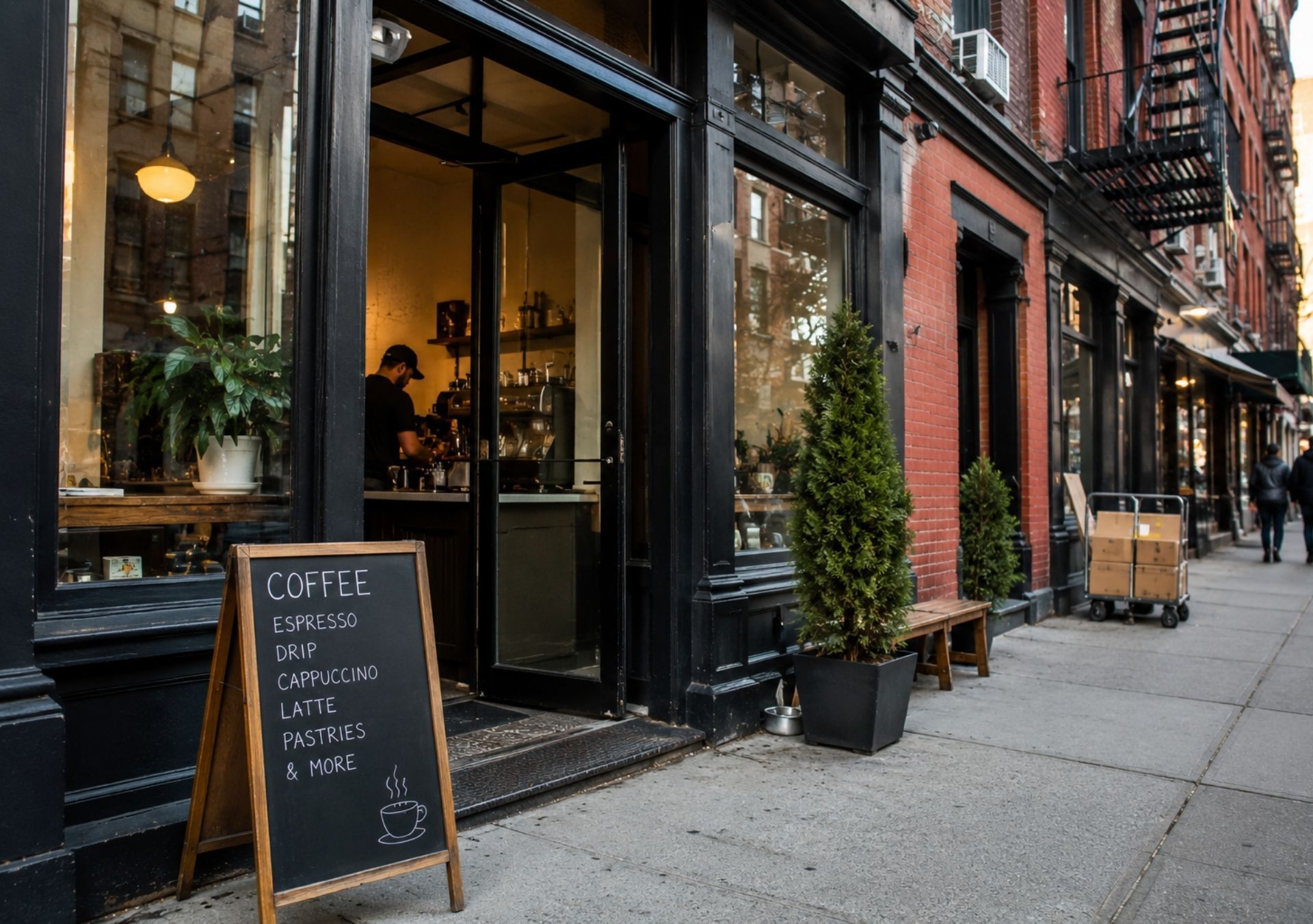
Manhattan's commercial density is the primary driver. A coffee shop on a busy Midtown block serves thousands of passersby daily, which means more slip-and-fall exposure than a similar shop in a quieter neighborhood in the Bronx or Staten Island. Insurers price that risk into every policy.
Property values and lease costs also matter. If a fire or water damage event hits your space, the cost to repair or replace fixtures in a Manhattan storefront is far higher than in outer boroughs. Litigation trends play a role too: New York County courts are known for larger jury awards, and insurers bake that into their underwriting models. The result is that two identical businesses, one in Manhattan and one in Queens, can see a 20% to 40% difference in premiums.

Comparing Essential Coverage Types
Not all policies protect you from the same risks. The two most commonly confused coverages are general liability and professional liability, and mixing them up can leave a dangerous gap in your protection.
Comparison Table: General Liability vs. Professional Liability
| Feature | General Liability (GL) | Professional Liability (E&O) |
|---|---|---|
| What it covers | Bodily injury, property damage, advertising injury | Errors, omissions, negligence in professional services |
| Who needs it | Nearly every business with a physical presence or client interaction | Consultants, accountants, designers, tech firms, agencies |
| Typical Manhattan cost | $40-$150/month | $50-$200/month |
| Common claim example | Customer slips on a wet floor in your shop | Client sues because your design recommendation caused a financial loss |
| Required by law? | Often required by landlords and contracts, not state law | Not required by law, but often required by client contracts |
Many small business owners assume general liability covers everything. It doesn't. If you provide any kind of professional advice, design work, or consulting, a GL policy won't respond to a claim alleging your work product caused harm. You need both.
Workers' Compensation Requirements in New York State
New York requires workers' comp coverage for virtually all employers, even those with just one part-time employee. There's no small-business exemption. Sole proprietors and partners in certain structures can opt out, but the moment you hire someone, you're on the hook.
Here's the good news for 2026: effective October 1, 2026, New York employers will see a 22% average reduction in workers' compensation premium rates, delivering meaningful savings across industries. Governor Hochul's office has highlighted over $1.7 billion in cumulative workers' comp savings for New York employers in recent years. If you've been putting off hiring because of insurance costs, this rate drop could change the math.
Failing to carry workers' comp in New York is a criminal offense. Penalties include fines of $2,000 per 10-day period of non-compliance and potential jail time for repeat violations.
Factors That Impact Your Insurance Quote
Your premium isn't pulled from thin air. Insurers use specific variables to calculate your rate, and understanding them gives you more control over what you pay.
Industry Risk Categories and Class Codes
Every business is assigned a class code based on its industry and the type of work performed. A Manhattan law firm falls into a low-risk office class, while a restaurant with a commercial kitchen sits in a much higher-risk category. Contractors and construction firms face the steepest rates, with New York contractor insurance costs reflecting the state's high claim frequency and severity.
Getting your class code wrong, either because your insurer misclassified you or because your business has evolved, can mean overpaying for years. It's worth reviewing your classification annually, especially if your operations have shifted.
Physical Location and High-Traffic Considerations
Your exact address in Manhattan affects your quote. A ground-floor retail space on Fifth Avenue carries more pedestrian liability exposure than a sixth-floor office in a Flatiron co-working building. Insurers also look at the age and condition of your building, fire suppression systems, and proximity to flood zones.
Businesses near subway entrances or major intersections tend to see higher general liability premiums because of increased foot traffic. If you're choosing between two locations, the insurance cost difference is worth factoring into your decision.
Revenue Size and Employee Headcount
Insurers use your annual revenue and payroll as proxies for exposure. A business generating $2 million in revenue has more customer interactions, more transactions, and more potential for claims than one generating $200,000. Similarly, each employee you add increases your workers' comp and general liability exposure.
Payroll is the single biggest driver of workers' comp premiums. The rate is calculated per $100 of payroll, multiplied by your class code rate. So a five-person team earning $300,000 combined in a low-risk office class will pay far less than a five-person team earning the same amount in a high-risk trade.

You can't change Manhattan's cost structure, but you can be strategic about how you buy coverage.
Bundling Policies with a Business Owner's Policy (BOP)
A BOP combines general liability and commercial property insurance into a single policy, typically at a 10% to 15% discount compared to buying them separately. For many Manhattan small businesses, a BOP is the most cost-effective starting point. New York BOP premiums generally range from $50 to $200 per month for small operations, depending on your industry and coverage limits.
BOPs work well for retail shops, professional offices, and service businesses. They're less suitable for contractors, manufacturers, or businesses with complex liability needs. If your risk profile is straightforward, bundling saves money and simplifies your paperwork.
Adjusting Deductibles to Balance Risk and Cost
Raising your deductible from $500 to $2,500 can reduce your annual premium by 10% to 20%. The trade-off is obvious: you'll pay more out of pocket if a claim occurs. For businesses with strong cash reserves and a clean claims history, a higher deductible is often a smart bet.
One common mistake is setting deductibles too high to chase premium savings. If a $5,000 deductible would strain your cash flow after a minor incident, the savings aren't worth the risk. Match your deductible to what you can comfortably absorb without disrupting operations.
Common Questions About NYC Business Insurance
How much does a basic policy cost for a Manhattan freelancer?
A freelance consultant or designer working from home or a coworking space can typically get general liability coverage for $30 to $60 per month. Professional liability adds another $40 to $100 monthly. Many freelancers bundle both for around $100 to $150 per month total, though rates vary based on your specific profession and revenue.
Do I need insurance if I work from a Manhattan coworking space?
Yes. Most coworking spaces require proof of general liability insurance before you sign a membership agreement. Even if yours doesn't, your personal renter's or homeowner's policy won't cover business-related claims. A basic GL policy is inexpensive and protects you if a client visits your space and gets injured.
Is cyber insurance worth the extra cost for small firms?
If you store client data, process payments, or rely on digital systems, cyber insurance is worth the $50 to $150 per month it typically costs. A single data breach can generate notification costs, legal fees, and regulatory fines that dwarf your annual premium. For professional services firms handling sensitive client information, it's becoming a standard part of the coverage stack.
What happens if I don't have Workers' Comp in New York?
The consequences are severe. New York treats failure to carry workers' comp as a
criminal offense with escalating penalties. Fines start at $2,000 for every 10-day period without coverage, and repeat violations can result in felony charges. Beyond the legal risk, an uninsured workplace injury could result in a lawsuit that threatens your entire business.
Making the Right Choice for Your Business
Insurance costs in Manhattan are real, but they're also manageable with the right approach. Start by understanding what coverage you're required to carry: workers' comp, disability, and paid family leave are non-negotiable for most employers. Then layer on general liability, professional liability, and property coverage based on your actual risk profile, not a generic checklist.
Take advantage of the October 2026 workers' comp rate reduction. Review your class codes annually. Consider a BOP if your needs are straightforward, and don't set deductibles higher than your cash reserves can handle.
The biggest mistake small business owners make isn't overpaying for insurance. It's underinsuring because they didn't understand what they actually needed. Get quotes from at least three brokers who specialize in New York commercial insurance, compare the coverage details (not just the price), and build a policy package that protects what you've worked to build. A few hours spent on this now can save you from a six-figure problem later.
ABOUT THE AUTHOR:
JELANI FENTON
As Owner of EG Bowman, I’m dedicated to continuing a legacy of trust and excellence built over more than seven decades. My focus is on helping businesses and individuals secure reliable, forward-thinking insurance solutions that protect their assets and support long-term growth.
Contact Us
OUR SERVICES
New York Business Insurance Coverage
General Liability Insurance


Workers Comp Insurance
Commercial Property Insurance
Commercial Auto Insurance
Commercial Umbrella Insurance
Business Owner's Policy
OUR SERVICES
New York Personal Insurance Coverage
Auto Insurance
Get coverage for your car and protect yourself on the road. We provide options for accidents, damages, and more.
Home Insurance
Protect your home and belongings with coverage for damages, theft, and unexpected events.
Umbrella Insurance
Extend your coverage with umbrella insurance for extra protection when you need it most.
Condo Insurance
Get peace of mind with condo insurance that protects your space and personal belongings.
NEW YORK BUSINESSES WE WORK WITH
Industries We Serve In New York
Electrician Insurance
Get coverage that protects electricians from accidents, property damage, and liability risks. Keep your tools, equipment, and business safe with plans designed for your needs. Request a quote to stay covered and focused on your work.
Real Estate Developer Insurance
Protect your projects with insurance that covers construction risks, liability, and property damage. We offer plans to keep your developments secure and on track. Get a quote to ensure your business is protected.
Wholesaler and Distributor Insurance
Protect your inventory and business operations with insurance that covers property damage and liability risks. Keep your supply chain running without disruptions. Get a quote to safeguard your business today.
What is an independent insurance agency, and how does it differ from a traditional insurance company?
An independent insurance agency works with multiple insurance carriers instead of just one. This allows us to provide customized coverage options tailored to your needs, rather than offering a one-size-fits-all policy. Independent agencies focus on finding the best value and coverage for their clients by comparing policies across various providers. At EG Bowman, we pride ourselves on offering personalized service and expertise to ensure our clients get the coverage that fits their specific needs.
What types of insurance does EG Bowman offer?
EG Bowman offers a wide range of insurance solutions, including commercial insurance, personal lines, property insurance, liability insurance, and specialized policies tailored to niche industries. Our focus is on protecting businesses and individuals from unforeseen risks. Whether you're looking for coverage for your home, car, or business, our team works to provide the most comprehensive and competitive options available. We’re here to make sure you’re prepared for the unexpected.
How does EG Bowman help businesses with insurance?
We specialize in understanding the unique risks businesses face and crafting insurance solutions to address them. From general liability to workers' compensation and industry-specific policies, our team ensures your business is protected at every level. We also provide risk management consultations to identify potential vulnerabilities and recommend solutions. With decades of experience, EG Bowman acts as a trusted partner, helping businesses navigate their insurance needs confidently.
Why should I choose EG Bowman as my insurance agency?
At EG Bowman, we combine decades of expertise with a client-focused approach to provide unparalleled service. Unlike larger, faceless companies, we build long-term relationships with our clients, offering personalized advice and solutions. We prioritize your needs, shop for the best rates, and advocate on your behalf when it comes to claims. Our goal is to be your trusted advisor in navigating insurance complexities and ensuring peace of mind.
How can I get a quote for insurance through EG Bowman?
Getting a quote with EG Bowman is simple and hassle-free. You can call us directly at 212-425-8150 or email us at info@egbowman.com to discuss your insurance needs. Our team will gather information about your situation and compare policies from multiple carriers to provide the best options. Whether it’s personal or business insurance, we ensure the process is transparent, efficient, and tailored to you.
Does EG Bowman offer insurance for small businesses?
Yes, EG Bowman specializes in working with small businesses. We understand the unique challenges small businesses face, from managing risks to staying within budget. Our insurance solutions cover everything from general liability to property insurance and more. By tailoring policies to fit your specific needs, we ensure your small business is well-protected while keeping costs manageable.
FAQS PAGE
Frequently Asked Questions
We understand you may have questions about our insurance services and how we can help protect what matters most to you. Below, you'll find answers to some of the most common questions we receive. If you don’t see the information you’re looking for, feel free to reach out to us directly. Our team is here to assist you with personalized advice and solutions.
NEWS & BLOG
Explore Our New York Insurance Blog



Contact Us