Most Common Business Policies
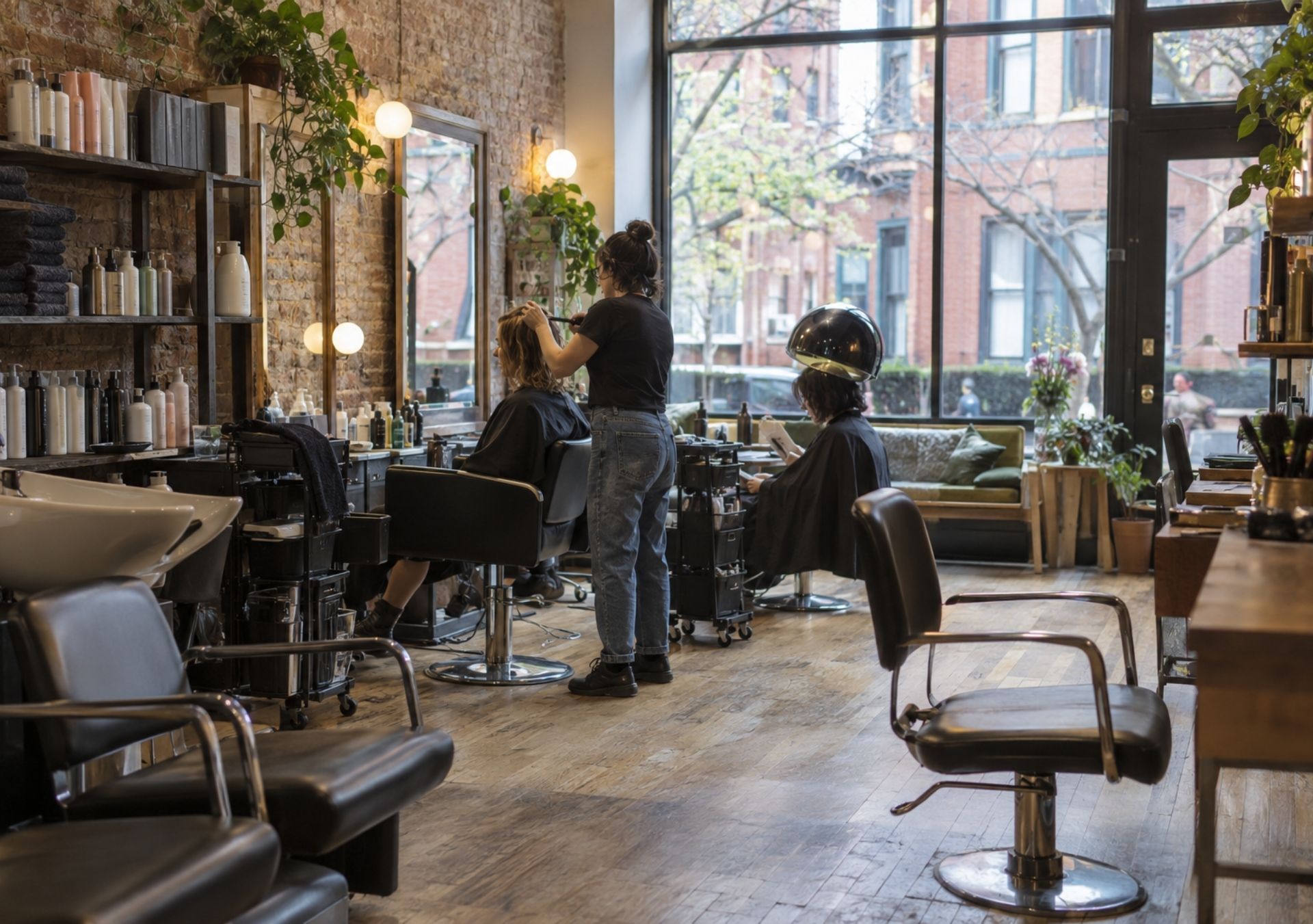
Running a hair salon in New York means juggling licenses, rent, staffing, and a dozen other concerns before you even pick up a pair of shears. One concern that often gets pushed to the bottom of the list is insurance, and that's a costly mistake. A single slip-and-fall claim or a data breach involving client payment info can shut your doors faster than a bad Yelp review. Understanding which types of coverage a New York hair salon needs, from liability and property to auto, cyber, and workers' compensation, is the difference between a minor setback and a business-ending disaster.
New York is a particularly expensive state for commercial insurance. Salon owners in New York City and its immediate suburbs face a premium gap where commercial insurance costs run 40% to 60% higher than the national average. Part of that markup stems from the state's litigation environment, where excessive litigation has been identified as a driver of affordability problems across many industries. That doesn't mean you can skip coverage. It means you need to be strategic about what you buy and why.
This guide breaks down each policy type, explains what New York law requires, and highlights the modern risks most salon owners overlook.
Understanding Liability Needs for New York Stylists
Liability insurance is the foundation of any salon's risk management plan. Two distinct policies cover two very different types of claims, and confusing them is one of the most common mistakes salon owners make.
General Liability for Slip-and-Fall Incidents
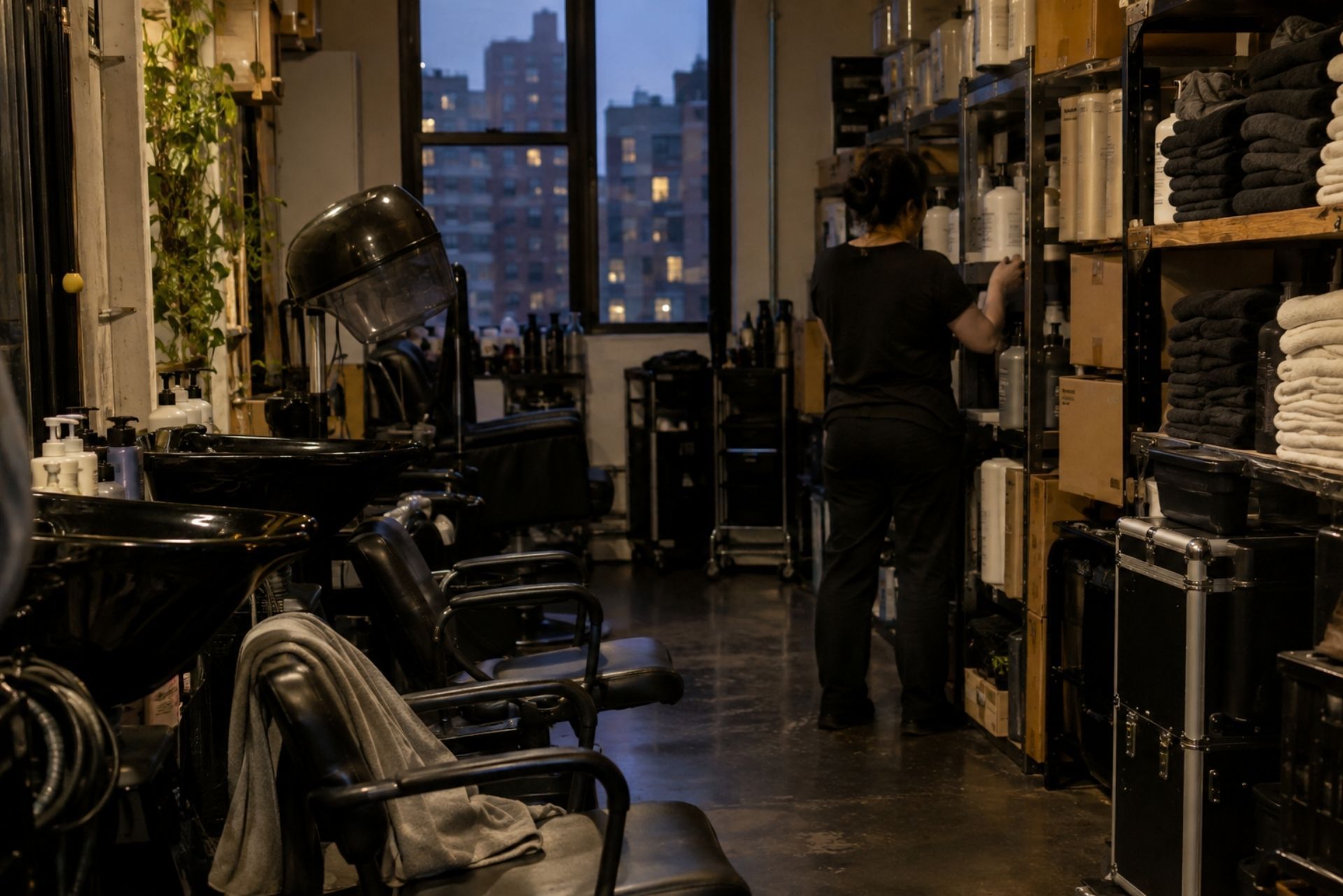
General liability (GL) covers bodily injury and property damage that happen on your premises but aren't directly related to the services you perform. Think of a client who trips over a cord near the reception desk, slips on a freshly mopped floor, or gets hit by a falling shelf of product. These claims are shockingly common in salons, where water, chemicals, and foot traffic create constant hazards.
A standard GL policy for a New York salon typically starts at $1 million per occurrence and $2 million aggregate. Your landlord will almost certainly require a certificate of insurance before signing your lease, and most will want to be listed as an additional insured on the policy.
Professional Liability: Protecting Against Service Errors
Professional liability, sometimes called errors and omissions (E&O) or malpractice insurance, covers claims arising from the services themselves. A chemical burn from a relaxer treatment, an allergic reaction to hair dye, or a botched keratin treatment that causes hair loss: these all fall under professional liability.
New York has seen increased scrutiny of beauty service providers, with investigations uncovering unlicensed procedures and safety violations at cosmetic facilities across the city. Even licensed, careful stylists face claims. A client who's unhappy with a color correction might allege negligence, and defending yourself costs money whether the claim has merit or not. Professional liability covers both legal defense costs and settlements.
Comparison: General Liability vs. Professional Liability
These two policies often get bundled together, but they protect against fundamentally different risks. Understanding the distinction helps you avoid gaps in coverage.
Coverage Comparison Table
| Feature | General Liability | Professional Liability |
|---|---|---|
| What it covers | Bodily injury and property damage on premises | Claims from services you perform |
| Example claim | Client slips on wet floor | Client suffers chemical burn from color treatment |
| Who needs it | Every salon, regardless of size | Every salon offering chemical or styling services |
| Typical limit | $1M per occurrence / $2M aggregate | $1M per occurrence / $1M aggregate |
| Required by landlord? | Almost always yes | Rarely, but strongly recommended |
| Covers legal defense? | Yes | Yes |
| Covers completed operations? | Yes (e.g., product sold causes reaction at home) | Yes (e.g., hair loss appears days after treatment) |
Most insurers offer a
Business Owner's Policy (BOP) that bundles GL with property coverage. Professional liability is usually a separate policy or endorsement. Don't assume your BOP includes it: check the declarations page.
Protecting Your Physical Assets and Inventory
Your salon's physical space represents a significant investment. Between styling chairs, wash stations, mirrors, retail inventory, and specialized equipment, a mid-size New York salon can easily have $50,000 to $150,000 in assets on-site.
Commercial Property for Salon Equipment and Chairs
Commercial property insurance covers damage to your building (if you own it) and your business personal property inside it. Fire, theft, vandalism, burst pipes, and certain weather events are all standard covered perils. If a pipe bursts overnight and ruins three styling stations and your entire retail wall, property insurance pays to replace them.
One detail that trips up salon owners: standard policies often exclude flood damage. If your salon is at street level in a flood-prone area of Brooklyn or Lower Manhattan, you'll need a separate flood policy through the National Flood Insurance Program or a private carrier.
Business Interruption for Unexpected Closures
Business interruption insurance, usually included in a BOP, replaces lost income when a covered event forces you to close temporarily. If that burst pipe shuts you down for three weeks while contractors rebuild, business interruption covers your ongoing expenses: rent, payroll, loan payments, and lost revenue.
The key phrase here is "covered event." Your property policy defines which perils trigger business interruption coverage. A government-ordered closure due to a health violation wouldn't qualify, but a fire or storm that makes the space unusable would. Review your policy's waiting period too. Most have a 48- to 72-hour deductible before coverage kicks in.
New York State Legal Requirements for Employers
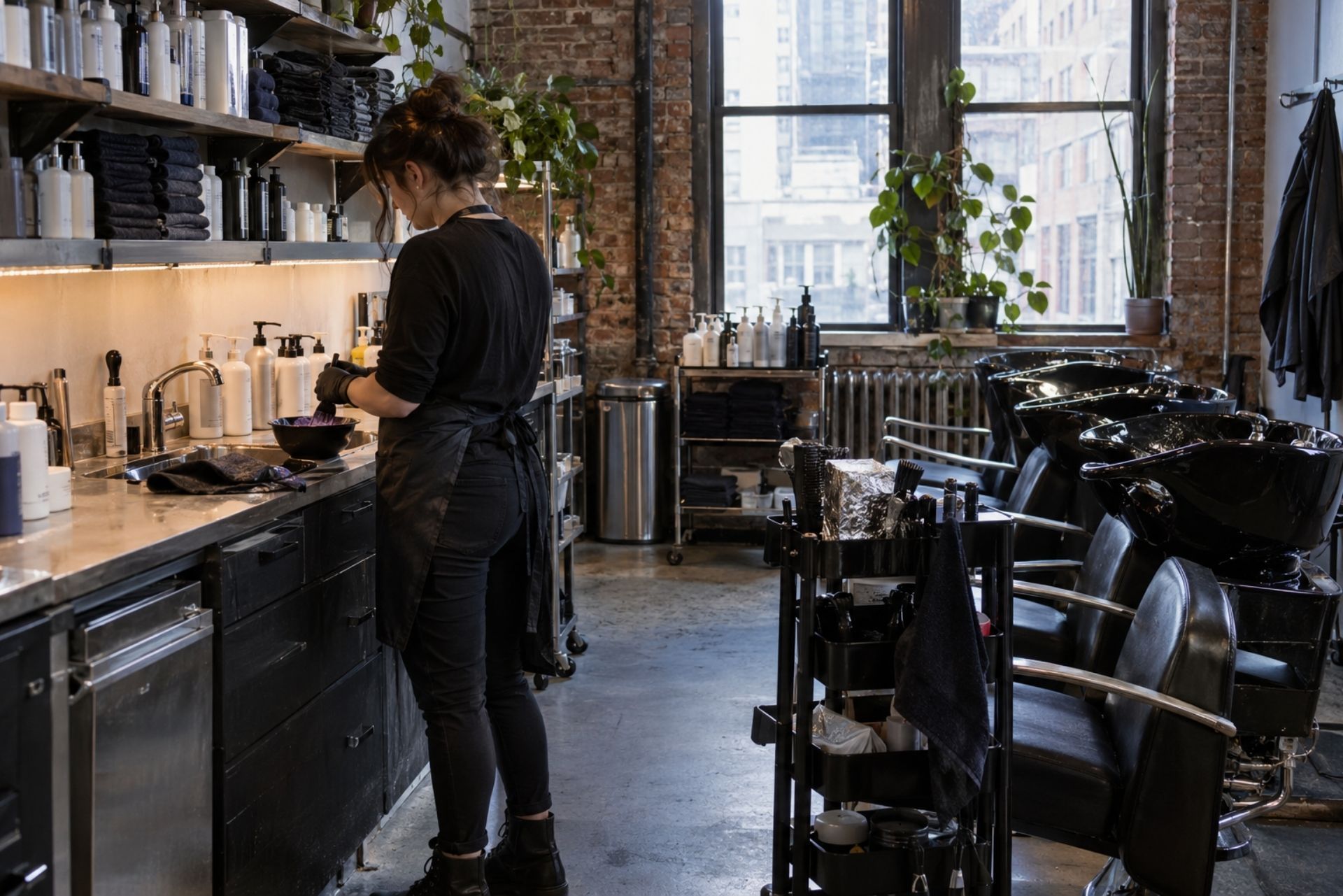
New York has some of the strictest employer insurance requirements in the country. If you have even one employee, including part-time shampoo assistants or front-desk staff, you're subject to multiple mandatory coverages.
Workers' Compensation for Salon Employees
New York requires workers' compensation for virtually all employees, with very few exceptions. There's no minimum employee count: even one W-2 worker triggers the requirement. Workers' comp covers medical expenses and lost wages when an employee is injured on the job. In a salon, common claims include repetitive strain injuries from cutting and styling, chemical exposure reactions, and slip-and-fall injuries.
You can purchase workers' comp through a private carrier or through the New York State Insurance Fund, which acts as a carrier of last resort. Premiums are based on your payroll and the classification codes assigned to your employees' job duties. Failing to carry workers' comp in New York is a criminal offense that can result in fines of $2,000 per 10-day period of noncompliance.
Disability and Paid Family Leave Compliance
Beyond workers' comp, New York mandates two additional coverages for employees. Short-term disability benefits (DBL) provide partial wage replacement for employees who can't work due to an off-the-job illness or injury, including pregnancy. The state sets specific premium rates and contribution limits that are updated periodically.
Paid Family Leave (PFL) gives employees job-protected, paid time off to bond with a new child, care for a family member with a serious health condition, or assist when a family member is deployed. The PFL premium rate is set annually by the state, and employees fund most of the cost through payroll deductions. You're responsible for obtaining the policy and administering the deductions. Both DBL and PFL can be purchased through your workers' comp carrier or through the state fund, and many insurers bundle them together.
Modern Risks: Commercial Auto and Cyber Security
Traditional coverage handles the physical risks of running a salon. But if your business model includes mobile services or online booking, you're exposed to risks that a standard BOP won't touch.
Hired and Non-Owned Auto for Mobile Services
If any employee uses a personal vehicle for business purposes, even just running to the supply store or making a house call for a bridal party, your personal auto policy won't cover an accident that happens during that trip. Hired and non-owned auto (HNOA) insurance fills this gap. It covers liability when employees drive their own cars or rented vehicles for work-related tasks.
HNOA is relatively inexpensive, often running $200 to $500 per year, and it's easy to add as an endorsement to your GL policy. If you own a vehicle in the salon's name, you'll need a full commercial auto policy instead. Don't overlook this coverage: a single at-fault accident during a business errand can expose your salon to six-figure liability.
Cyber Liability for Client Booking Data
Most salons now store client data digitally through booking platforms, point-of-sale systems, and email marketing tools. That data includes names, phone numbers, email addresses, and often credit card information. A data breach, whether from a hacked booking system or a stolen laptop, triggers notification requirements under New York's SHIELD Act.
Cyber liability insurance covers the cost of notifying affected clients, providing credit monitoring, hiring forensic IT specialists, and defending against lawsuits that follow a breach. It also covers regulatory fines. For a small salon, a $1 million cyber policy might cost $500 to $1,500 per year. Given that the average cost of a small business data breach exceeds $100,000 when you factor in legal fees and lost business, it's a worthwhile investment.
Common Questions About Salon Insurance
Frequently Asked Questions
Do independent contractors (booth renters) need their own insurance? Yes. In New York, booth renters are treated as independent businesses. Your salon's policy won't cover their professional liability claims. Require each renter to carry their own GL and professional liability policy, and get certificates of insurance on file.
Can I get all my coverage from one insurer? Often, yes. Many carriers offer a BOP that bundles GL, property, and business interruption, then let you add professional liability, cyber, and HNOA as endorsements. Workers' comp and DBL/PFL are typically separate policies but can sometimes come from the same carrier.
How much does salon insurance cost in New York? Costs vary widely. A solo stylist in Upstate New York might pay $1,200 to $2,000 per year for basic coverage. A multi-chair salon in Manhattan with five employees could pay $5,000 to $10,000 or more, especially once workers' comp is factored in.
Does my salon need insurance if I work alone and rent a chair? You still need professional liability and likely GL coverage. Your chair rental agreement may require it. Even without employees, a client claim against you personally could wipe out your savings.
What happens if I don't carry workers' comp in New York? The state can issue stop-work orders, impose fines of $2,000 for every 10-day period of noncompliance, and hold you personally liable for any employee injuries. It's also a misdemeanor criminal offense.
Are new cosmetology requirements affecting insurance needs?
New York has introduced updated requirements for cosmetology training and licensing that affect how stylists are credentialed. Staying current with licensing reduces your professional liability risk and can help keep premiums lower.
Making the Right Choice for Your Salon
Getting the right insurance for a New York hair salon isn't about buying every policy available. It's about matching your specific risks to the right coverage types and limits. A solo booth renter has different needs than a 10-chair salon with employees and a mobile bridal team.
Start with the non-negotiables: GL, professional liability, and workers' comp if you have any employees. Add property coverage and business interruption to protect your physical investment. Then evaluate whether your operations expose you to auto or cyber risks, and fill those gaps accordingly.
Request quotes from at least three carriers or work with an independent broker who specializes in small business or beauty industry accounts. Ask each one to identify coverage gaps in your current setup. The right broker won't just sell you a policy: they'll help you understand what each coverage does and where your exposure is greatest.
Your salon's reputation took years to build. The right insurance portfolio makes sure a single bad day doesn't undo all of that work.
ABOUT THE AUTHOR:
JELANI FENTON
As Owner of EG Bowman, I’m dedicated to continuing a legacy of trust and excellence built over more than seven decades. My focus is on helping businesses and individuals secure reliable, forward-thinking insurance solutions that protect their assets and support long-term growth.
Contact Us
OUR SERVICES
New York Business Insurance Coverage
General Liability Insurance


Workers Comp Insurance
Commercial Property Insurance
Commercial Auto Insurance
Commercial Umbrella Insurance
Business Owner's Policy
OUR SERVICES
New York Personal Insurance Coverage
Auto Insurance
Get coverage for your car and protect yourself on the road. We provide options for accidents, damages, and more.
Home Insurance
Protect your home and belongings with coverage for damages, theft, and unexpected events.
Umbrella Insurance
Extend your coverage with umbrella insurance for extra protection when you need it most.
Condo Insurance
Get peace of mind with condo insurance that protects your space and personal belongings.
NEW YORK BUSINESSES WE WORK WITH
Industries We Serve In New York
Electrician Insurance
Get coverage that protects electricians from accidents, property damage, and liability risks. Keep your tools, equipment, and business safe with plans designed for your needs. Request a quote to stay covered and focused on your work.
Real Estate Developer Insurance
Protect your projects with insurance that covers construction risks, liability, and property damage. We offer plans to keep your developments secure and on track. Get a quote to ensure your business is protected.
Wholesaler and Distributor Insurance
Protect your inventory and business operations with insurance that covers property damage and liability risks. Keep your supply chain running without disruptions. Get a quote to safeguard your business today.
What is an independent insurance agency, and how does it differ from a traditional insurance company?
An independent insurance agency works with multiple insurance carriers instead of just one. This allows us to provide customized coverage options tailored to your needs, rather than offering a one-size-fits-all policy. Independent agencies focus on finding the best value and coverage for their clients by comparing policies across various providers. At EG Bowman, we pride ourselves on offering personalized service and expertise to ensure our clients get the coverage that fits their specific needs.
What types of insurance does EG Bowman offer?
EG Bowman offers a wide range of insurance solutions, including commercial insurance, personal lines, property insurance, liability insurance, and specialized policies tailored to niche industries. Our focus is on protecting businesses and individuals from unforeseen risks. Whether you're looking for coverage for your home, car, or business, our team works to provide the most comprehensive and competitive options available. We’re here to make sure you’re prepared for the unexpected.
How does EG Bowman help businesses with insurance?
We specialize in understanding the unique risks businesses face and crafting insurance solutions to address them. From general liability to workers' compensation and industry-specific policies, our team ensures your business is protected at every level. We also provide risk management consultations to identify potential vulnerabilities and recommend solutions. With decades of experience, EG Bowman acts as a trusted partner, helping businesses navigate their insurance needs confidently.
Why should I choose EG Bowman as my insurance agency?
At EG Bowman, we combine decades of expertise with a client-focused approach to provide unparalleled service. Unlike larger, faceless companies, we build long-term relationships with our clients, offering personalized advice and solutions. We prioritize your needs, shop for the best rates, and advocate on your behalf when it comes to claims. Our goal is to be your trusted advisor in navigating insurance complexities and ensuring peace of mind.
How can I get a quote for insurance through EG Bowman?
Getting a quote with EG Bowman is simple and hassle-free. You can call us directly at 212-425-8150 or email us at info@egbowman.com to discuss your insurance needs. Our team will gather information about your situation and compare policies from multiple carriers to provide the best options. Whether it’s personal or business insurance, we ensure the process is transparent, efficient, and tailored to you.
Does EG Bowman offer insurance for small businesses?
Yes, EG Bowman specializes in working with small businesses. We understand the unique challenges small businesses face, from managing risks to staying within budget. Our insurance solutions cover everything from general liability to property insurance and more. By tailoring policies to fit your specific needs, we ensure your small business is well-protected while keeping costs manageable.
FAQS PAGE
Frequently Asked Questions
We understand you may have questions about our insurance services and how we can help protect what matters most to you. Below, you'll find answers to some of the most common questions we receive. If you don’t see the information you’re looking for, feel free to reach out to us directly. Our team is here to assist you with personalized advice and solutions.
NEWS & BLOG
Explore Our New York Insurance Blog


Contact Us