New York HVAC Equipment Manufacturer Insurance
See How We're Different:
or Call Us: 212-425-8150
Most Common Business Policies
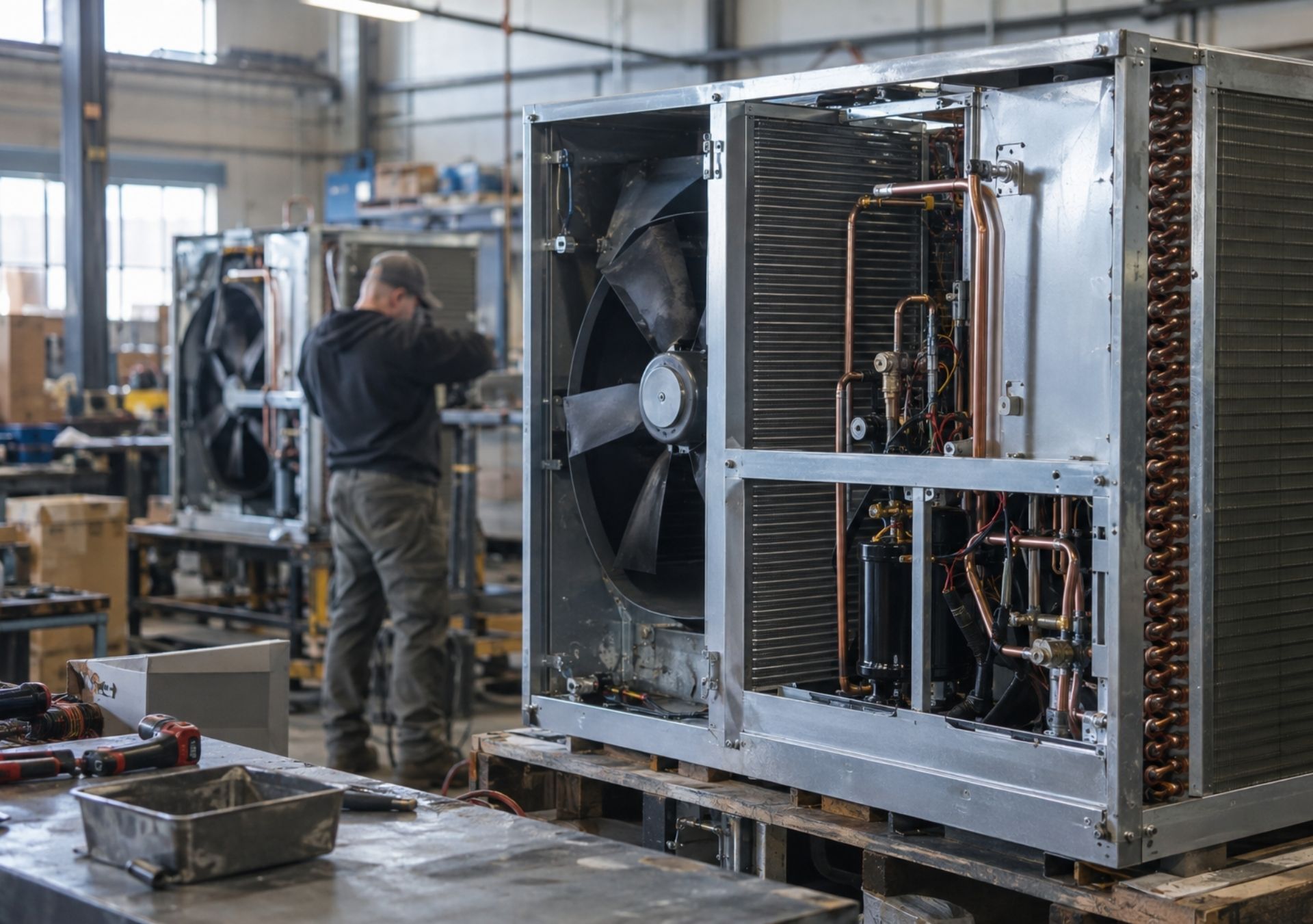
A single product defect in an HVAC unit can trigger a chain of events that no manufacturer wants to face: property damage at a customer's facility, a personal injury claim, a regulatory investigation, and a lawsuit that names your company as the defendant. For New York HVAC equipment manufacturers, the insurance question isn't whether you need coverage, but how many layers of it your operation actually requires. Between state-mandated programs, industry-specific exposures, and the growing threat of cyberattacks on manufacturing networks, the answer is more complex than most business owners expect. New York's regulatory environment adds its own wrinkles, from strict workers' compensation enforcement to paid family leave contributions that change annually. Understanding what insurance a New York HVAC manufacturer needs across liability, property, auto, cyber, and workers' compensation lines is the difference between surviving a major claim and closing your doors. This guide breaks down each coverage type, explains how they interact, and highlights the gaps that catch manufacturers off guard.
Core Liability Protection for HVAC Manufacturers
Liability insurance forms the foundation of any HVAC manufacturer's risk management program. The stakes are high because your products end up in homes, hospitals, office buildings, and industrial facilities where a malfunction can cause fires, carbon monoxide exposure, or catastrophic water damage. A single claim from a commercial building owner can easily exceed $1 million when you factor in property damage, medical costs, and legal defense fees.
New York courts are plaintiff-friendly, and the state follows a "pure comparative negligence" standard. That means even if your company is only 20% at fault, you're still on the hook for 20% of the damages, which can be substantial in multi-party litigation involving contractors, installers, and building owners.
General Liability and Product Liability Risks
General liability (GL) covers third-party bodily injury and property damage claims that arise from your operations. If a visitor slips on your factory floor or your delivery crew damages a client's loading dock, GL responds. But the bigger concern for manufacturers is product liability, which covers claims arising from defective products after they leave your facility.
Here's where it gets specific. Imagine you manufacture a commercial rooftop HVAC unit with a faulty heat exchanger. Six months after installation, the unit leaks refrigerant into a restaurant's ventilation system, sickening employees and forcing a temporary closure. The restaurant owner sues for medical bills, lost revenue, and remediation costs. Your product liability coverage handles the defense and any settlement or judgment.
Most manufacturers carry GL and product liability on a single commercial general liability policy, but the limits matter. A $1 million per-occurrence / $2 million aggregate policy might be adequate for a small operation, but mid-size manufacturers with products in commercial buildings should consider $5 million or higher, often achieved through an umbrella or excess liability policy. The commercial insurance market in spring 2026 has shown moderate rate increases for manufacturing risks, making it important to shop competitively.
Professional Liability for Design and Engineering Services
If your company designs custom HVAC systems, provides engineering specifications, or offers consulting on system configurations, you face errors and omissions (E&O) exposure that general liability won't cover. GL policies specifically exclude claims arising from professional services or advice.
Consider this scenario: your engineering team designs a chiller system for a data center, but the specifications underestimate the cooling load. The data center overheats, destroying servers and causing $3 million in downtime losses. The client sues for negligent design. Without professional liability insurance, your company pays out of pocket for both defense costs and damages.
E&O policies for HVAC manufacturers who provide design services typically start around $1 million in coverage. If you're working on large commercial or industrial projects, your contracts will often require proof of professional liability before you can bid.
Securing Physical Assets and Production Lines
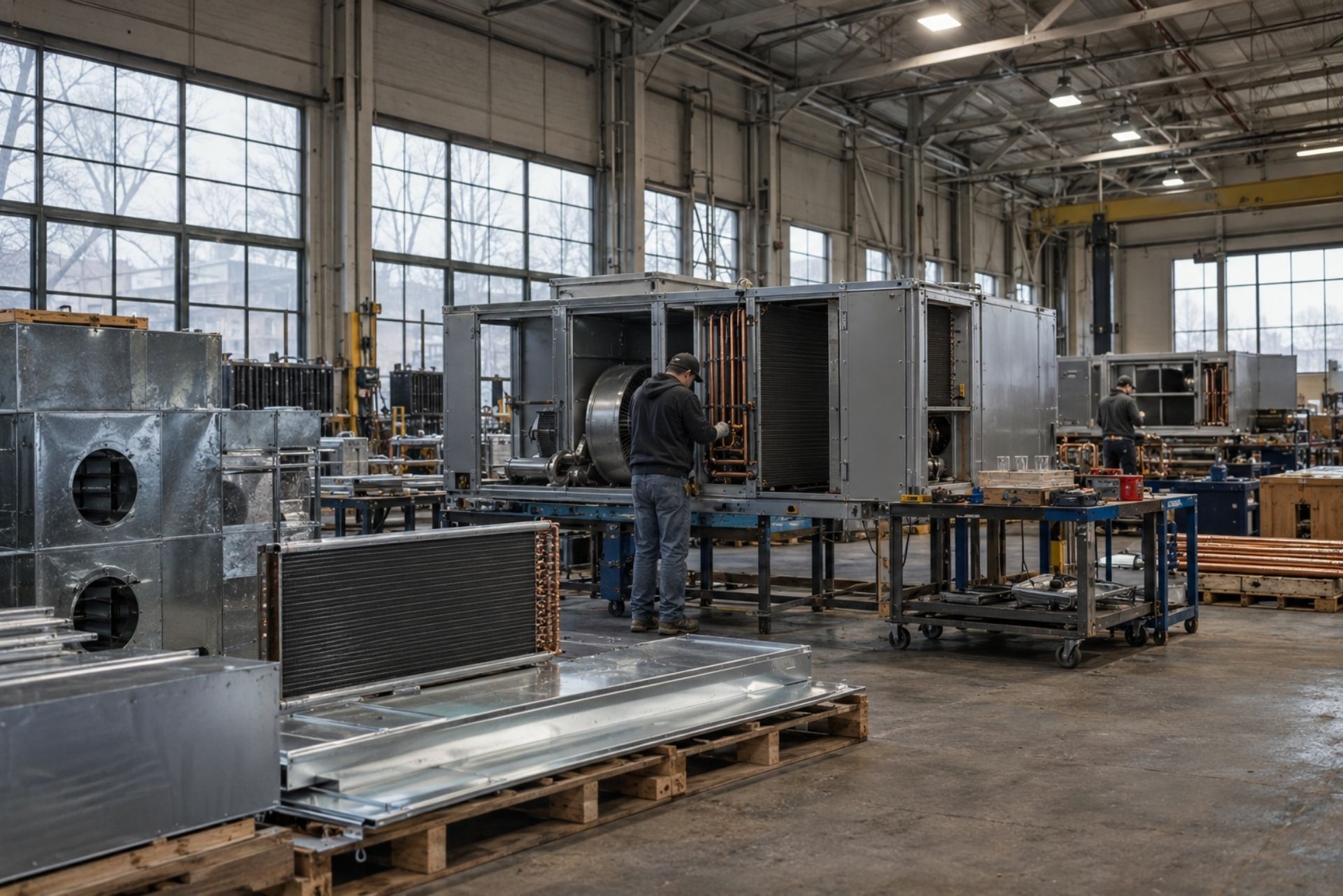
Your manufacturing facility, raw materials, finished inventory, and production equipment represent millions of dollars in physical assets. A fire, severe storm, or equipment failure can halt production for weeks or months, and the financial impact extends far beyond the cost of replacing damaged property.
Commercial Property vs. Inland Marine Coverage
Commercial property insurance covers your building, equipment, inventory, and business personal property against perils like fire, wind, theft, and vandalism. For a New York HVAC manufacturer, your policy should reflect the full replacement cost of your facility and contents, not just the market value.
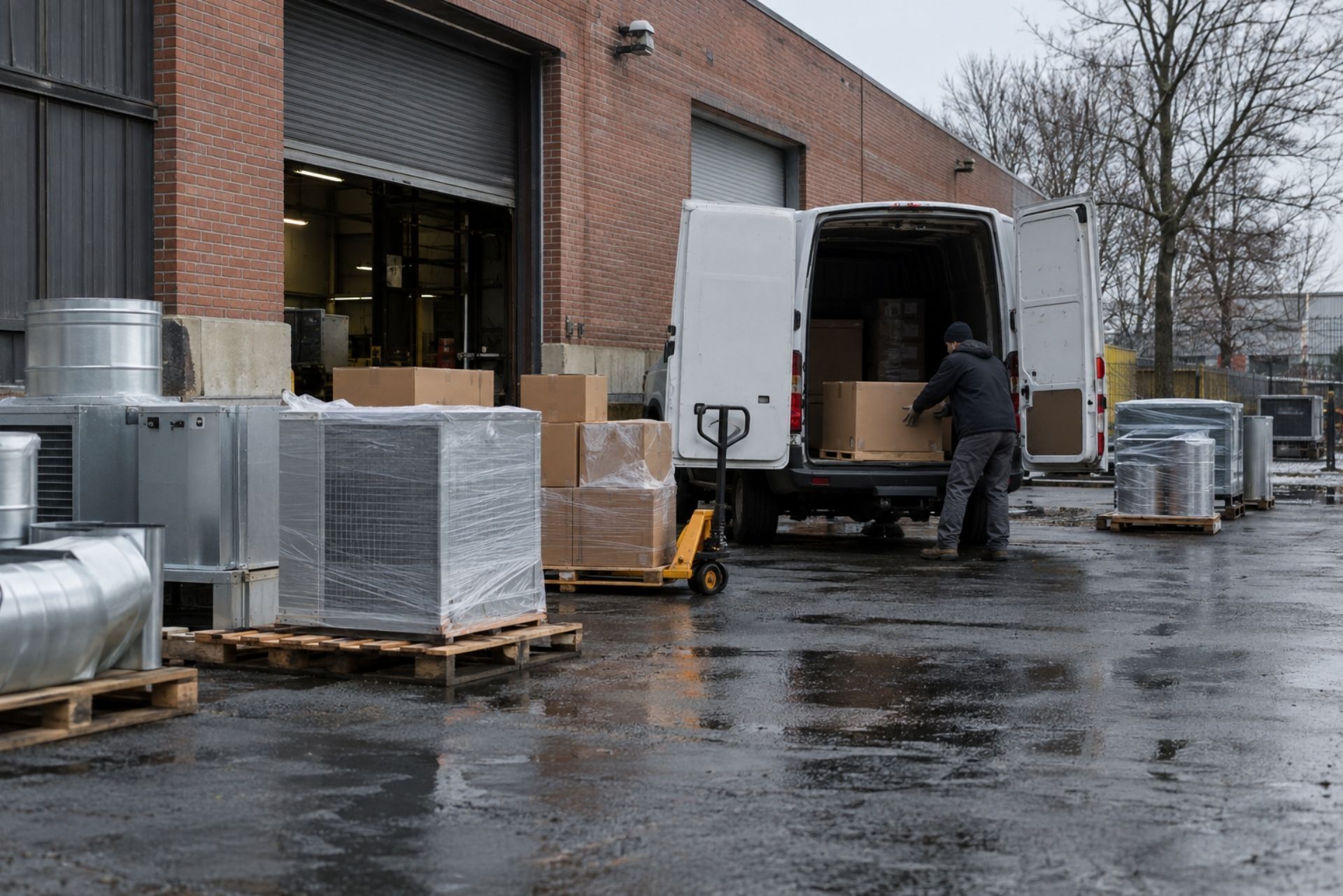
But here's a common gap: commercial property policies cover assets at your listed locations. If you store components at a warehouse across town, ship finished units to a staging area, or have equipment in transit, those items may not be covered. That's where inland marine insurance fills the void. Inland marine covers property in transit, at temporary locations, or stored off-site. For manufacturers who ship units to job sites or distribution centers, this coverage is essential.
One thing to keep in mind: New York manufacturers in flood-prone areas near the Hudson River, Long Island coastline, or other waterways need separate flood insurance. Standard property policies exclude flood damage entirely.
Equipment Breakdown and Business Interruption
Your CNC machines, welding equipment, sheet metal fabrication lines, and testing apparatus are the heart of your operation. Equipment breakdown insurance (sometimes called boiler and machinery coverage) pays for repairs or replacement when mechanical or electrical failure occurs, covering scenarios that standard property insurance excludes.
Business interruption insurance is the companion coverage that keeps your company financially viable during a shutdown. It replaces lost income and covers ongoing expenses like payroll, loan payments, and rent while your facility is being repaired. For HVAC manufacturing operations, where lead times on specialty equipment can stretch months, business interruption coverage with an adequate period of restoration is critical. Most policies offer 12 months of coverage, but manufacturers with custom equipment should consider extending that to 18 or 24 months.
New York State Mandates and Fleet Management
New York imposes specific insurance requirements on employers that go beyond what most other states demand. Failing to comply doesn't just leave you exposed to claims; it can result in criminal penalties.
Workers' Compensation and Disability Requirements
New York requires every employer, even those with just one employee, to carry workers' compensation insurance. There are no exemptions based on company size, industry, or payroll volume. The penalties for non-compliance are severe: fines of $2,000 per 10-day period without coverage, plus potential criminal charges for officers and directors.
Beyond workers' comp, New York mandates short-term disability benefits (DBL) for employees who suffer off-the-job injuries or illnesses. The state also requires Paid Family Leave (PFL), which allows employees to take time off to bond with a new child, care for a family member with a serious health condition, or address needs related to a family member's military deployment. For 2026, the PFL employee contribution rate is set at 0.432% of wages, capped at the statewide average weekly wage. Employers can collect this contribution through payroll deductions, but they're responsible for securing the coverage through their disability carrier or through the New York State Insurance Fund.
Manufacturing environments carry elevated workers' comp risks. Lacerations from sheet metal, burns from welding and brazing, repetitive motion injuries from assembly work, and hearing loss from prolonged noise exposure are all common claims. Your experience modification rate (mod rate) directly affects your premium, so investing in safety programs pays off in both human and financial terms.
Commercial Auto for Delivery and Service Fleets
If your company operates delivery trucks, service vans, or any vehicles used for business purposes, New York requires commercial auto insurance. This applies even if employees use personal vehicles for company errands, a situation that creates a gap many manufacturers overlook.
Commercial auto policies cover liability for accidents involving company vehicles, physical damage to the vehicles themselves, and medical payments for injured occupants. For HVAC manufacturers running flatbed trucks loaded with heavy equipment, the liability limits should reflect the potential severity of an accident. A truck carrying a 5,000-pound rooftop unit that causes a multi-vehicle accident on the Long Island Expressway could generate claims well into seven figures.
Hired and non-owned auto coverage fills the gap when employees drive rental vehicles or their own cars for business purposes. Without it, your company has no protection if an employee causes an accident while picking up parts from a supplier.
Comparison of Standard vs. Specialized HVAC Coverage
Not all policies are created equal. Here's how standard commercial coverage stacks up against specialized programs designed for HVAC manufacturers:
| Coverage Area | Standard Commercial Policy | Specialized HVAC Manufacturing Policy |
|---|---|---|
| Product Liability | Generic limits, broad exclusions | Tailored to HVAC-specific defect claims |
| Product Recall | Typically excluded | Available as endorsement |
| Equipment Breakdown | Basic coverage or excluded | Includes CNC, fabrication, and testing equipment |
| Pollution Liability | Excluded | Covers refrigerant leaks and chemical spills |
| Installation Coverage | Not included | Extends to products during installation |
| Completed Operations | Limited duration | Extended tail for long-life HVAC systems |
The difference becomes clear during a claim. A standard policy might deny coverage for a refrigerant leak that contaminates a building's air supply, classifying it as a pollution event. A specialized policy written for HVAC manufacturers anticipates that exact scenario and covers it. The insurance needs of HVAC manufacturing plants differ enough from general manufacturing that off-the-shelf policies often leave dangerous gaps.
Addressing Modern Risks: Cyber and Data Security
HVAC manufacturers increasingly rely on networked production systems, IoT-enabled quality control, and cloud-based ERP platforms. A ransomware attack that locks your production management system can halt manufacturing just as effectively as a fire. Cyber liability insurance covers the costs of responding to a data breach or cyberattack, including forensic investigation, customer notification, legal defense, regulatory fines, and business income loss during a system outage.
The risk is real and growing. Manufacturers are prime targets because they often run legacy systems with known vulnerabilities, and the pressure to resume production quickly makes them more likely to pay ransoms. A cyber policy for an HVAC manufacturer should include coverage for both first-party losses (your own costs) and third-party claims (if customer data or connected building systems are compromised through your products).
If your HVAC units connect to building automation systems, you also face potential liability if a cyber breach in your product allows unauthorized access to a customer's network. This intersection of product liability and cyber risk is a growing concern across the commercial insurance market and one that requires careful policy coordination.
Common Questions About HVAC Manufacturing Insurance
How much does insurance cost for a New York HVAC manufacturer? Premiums vary widely based on revenue, payroll, claims history, and the types of products you manufacture. A mid-size operation with $10 million in revenue might pay $80,000 to $150,000 annually across all lines of coverage.
Can I bundle all my coverage into one policy? A Business Owner's Policy (BOP) bundles GL and property coverage but won't include workers' comp, commercial auto, or cyber. Most manufacturers need at least four to five separate policies or a carefully structured package program.
Do I need pollution liability if I only use standard refrigerants? Yes. Even EPA-approved refrigerants can cause property damage and health claims if released in enclosed spaces. Standard GL policies exclude pollution events, so a separate environmental liability policy is the only reliable protection.
What happens if I don't carry workers' compensation in New York? The state can issue stop-work orders, impose fines of $2,000 for every 10-day lapse, and pursue criminal charges against company officers. You're also personally liable for any employee injuries during the gap.
Does my commercial auto policy cover employees using personal vehicles? No. You need a hired and non-owned auto endorsement to cover liability when employees drive their own cars or rentals for business purposes.
Is product recall coverage included in my general liability policy?
Almost never. Product recall is a separate coverage that pays for the costs of notifying customers, retrieving defective units, and replacing or repairing them. For manufacturers, this coverage can prevent a recall from becoming a financial catastrophe.
Making the Right Choice for Your Facility
The insurance needs of a New York HVAC equipment manufacturer span at least five major coverage lines, and each one addresses a distinct set of risks. Skipping any single layer, whether it's cyber liability, inland marine, or professional E&O, creates a gap that could prove devastating during a claim.
Start by cataloging your actual exposures: the products you build, the services you provide, the vehicles you operate, the data you store, and the number of employees on your payroll. Then work with a broker who understands manufacturing risks and New York's regulatory requirements. The PFL and disability mandates alone require careful coordination to stay compliant.
Review your program annually, especially as you add product lines, enter new markets, or expand your workforce. The right insurance program doesn't just protect you from financial loss; it gives you the confidence to bid on larger projects, sign tougher contracts, and grow your business knowing the safety net is in place.
ABOUT THE AUTHOR:
JELANI FENTON
As Owner of EG Bowman, I’m dedicated to continuing a legacy of trust and excellence built over more than seven decades. My focus is on helping businesses and individuals secure reliable, forward-thinking insurance solutions that protect their assets and support long-term growth.
Contact Us
OUR SERVICES
New York Business Insurance Coverage
General Liability Insurance


Workers Comp Insurance
Commercial Property Insurance
Commercial Auto Insurance
Commercial Umbrella Insurance
Business Owner's Policy
OUR SERVICES
New York Personal Insurance Coverage
Auto Insurance
Get coverage for your car and protect yourself on the road. We provide options for accidents, damages, and more.
Home Insurance
Protect your home and belongings with coverage for damages, theft, and unexpected events.
Umbrella Insurance
Extend your coverage with umbrella insurance for extra protection when you need it most.
Condo Insurance
Get peace of mind with condo insurance that protects your space and personal belongings.
NEW YORK BUSINESSES WE WORK WITH
Industries We Serve In New York
Electrician Insurance
Get coverage that protects electricians from accidents, property damage, and liability risks. Keep your tools, equipment, and business safe with plans designed for your needs. Request a quote to stay covered and focused on your work.
Real Estate Developer Insurance
Protect your projects with insurance that covers construction risks, liability, and property damage. We offer plans to keep your developments secure and on track. Get a quote to ensure your business is protected.
Wholesaler and Distributor Insurance
Protect your inventory and business operations with insurance that covers property damage and liability risks. Keep your supply chain running without disruptions. Get a quote to safeguard your business today.
What is an independent insurance agency, and how does it differ from a traditional insurance company?
An independent insurance agency works with multiple insurance carriers instead of just one. This allows us to provide customized coverage options tailored to your needs, rather than offering a one-size-fits-all policy. Independent agencies focus on finding the best value and coverage for their clients by comparing policies across various providers. At EG Bowman, we pride ourselves on offering personalized service and expertise to ensure our clients get the coverage that fits their specific needs.
What types of insurance does EG Bowman offer?
EG Bowman offers a wide range of insurance solutions, including commercial insurance, personal lines, property insurance, liability insurance, and specialized policies tailored to niche industries. Our focus is on protecting businesses and individuals from unforeseen risks. Whether you're looking for coverage for your home, car, or business, our team works to provide the most comprehensive and competitive options available. We’re here to make sure you’re prepared for the unexpected.
How does EG Bowman help businesses with insurance?
We specialize in understanding the unique risks businesses face and crafting insurance solutions to address them. From general liability to workers' compensation and industry-specific policies, our team ensures your business is protected at every level. We also provide risk management consultations to identify potential vulnerabilities and recommend solutions. With decades of experience, EG Bowman acts as a trusted partner, helping businesses navigate their insurance needs confidently.
Why should I choose EG Bowman as my insurance agency?
At EG Bowman, we combine decades of expertise with a client-focused approach to provide unparalleled service. Unlike larger, faceless companies, we build long-term relationships with our clients, offering personalized advice and solutions. We prioritize your needs, shop for the best rates, and advocate on your behalf when it comes to claims. Our goal is to be your trusted advisor in navigating insurance complexities and ensuring peace of mind.
How can I get a quote for insurance through EG Bowman?
Getting a quote with EG Bowman is simple and hassle-free. You can call us directly at 212-425-8150 or email us at info@egbowman.com to discuss your insurance needs. Our team will gather information about your situation and compare policies from multiple carriers to provide the best options. Whether it’s personal or business insurance, we ensure the process is transparent, efficient, and tailored to you.
Does EG Bowman offer insurance for small businesses?
Yes, EG Bowman specializes in working with small businesses. We understand the unique challenges small businesses face, from managing risks to staying within budget. Our insurance solutions cover everything from general liability to property insurance and more. By tailoring policies to fit your specific needs, we ensure your small business is well-protected while keeping costs manageable.
FAQS PAGE
Frequently Asked Questions
We understand you may have questions about our insurance services and how we can help protect what matters most to you. Below, you'll find answers to some of the most common questions we receive. If you don’t see the information you’re looking for, feel free to reach out to us directly. Our team is here to assist you with personalized advice and solutions.
NEWS & BLOG
Explore Our New York Insurance Blog


Contact Us