New York Meal Preparation Company Insurance
See How We're Different:
or Call Us: 212-425-8150
Most Common Business Policies
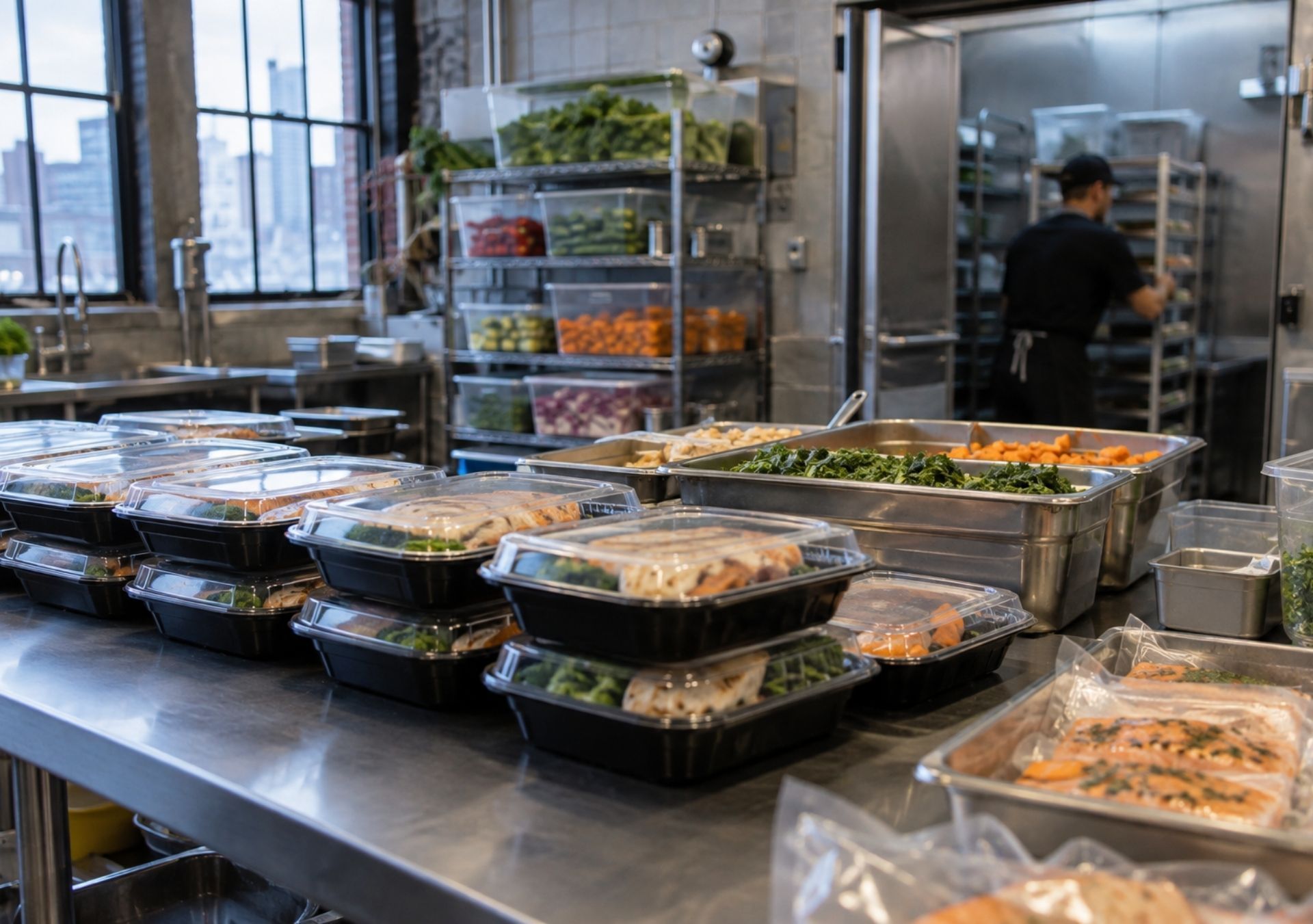
Running a meal preparation company in New York means juggling tight margins, perishable inventory, and a constant stream of customer orders. A single kitchen accident, a delivery van fender-bender, or a batch of contaminated food can threaten your entire operation. Rising food costs and tighter margins are forcing business owners to be more disciplined in how they protect their operations, and insurance sits at the center of that discipline.
So what insurance does a New York meal preparation company actually need? The answer depends on your size, your delivery model, and whether you sell online, but most kitchens need some combination of liability, property, auto, cyber, and workers' compensation coverage. Getting the mix right protects you from the claims that can close a food business overnight. Getting it wrong leaves gaps that no amount of careful cooking can fix.
This guide breaks down each coverage type, explains New York-specific mandates, and helps you compare basic versus comprehensive protection so you can make a confident decision for your kitchen.
Core Insurance Requirements for New York Food Businesses
New York State holds food businesses to strict standards, and the insurance requirements reflect that. Whether you're operating out of a commissary kitchen in Brooklyn or a standalone facility upstate, certain policies aren't optional: they're legally required or practically essential for survival.
Your insurance stack starts with three foundational layers: liability coverage to protect against lawsuits, workers' compensation to satisfy state law, and commercial auto if you're running delivery vehicles. Skipping any one of these creates exposure that could shut down your business after a single incident.
General Liability and Product Liability
General liability insurance covers third-party bodily injury and property damage claims. If a delivery driver tracks water into a client's office and someone slips, your GL policy responds. Most landlords and commissary kitchens in New York require proof of GL coverage before they'll sign a lease, typically with limits of $1 million per occurrence (https://www.insureon.com/food-business-insurance/restaurants/new-york).
Product liability is the coverage that matters most for meal prep specifically. A foodborne illness claim against a catering or meal prep business can cost $75,000 or more in damages before legal fees even enter the picture. If a customer gets sick from undercooked chicken in one of your meals, product liability pays for their medical bills, your legal defense, and any settlement. Many insurers bundle GL and product liability into a single policy, but confirm that food-related claims are explicitly covered, not excluded.
Workers' Compensation and NYS Disability Benefits
New York is unforgiving on this one. Every business with even one employee must carry workers' compensation insurance, and non-compliance fines can reach $2,000 for every 10-day period you go without it. That adds up fast.
Meal prep kitchens face real injury risk: burns from commercial ovens, cuts from prep work, repetitive strain from portioning hundreds of meals per day. Workers' comp covers medical bills and lost wages for injured employees, and it protects you from lawsuits over workplace injuries. New York also requires statutory disability benefits (DBL) and paid family leave (PFL) coverage, which are often bundled with your workers' comp policy. Don't treat these as afterthoughts: the state audits for compliance, and penalties are steep.
Commercial Auto Insurance for Delivery Vans
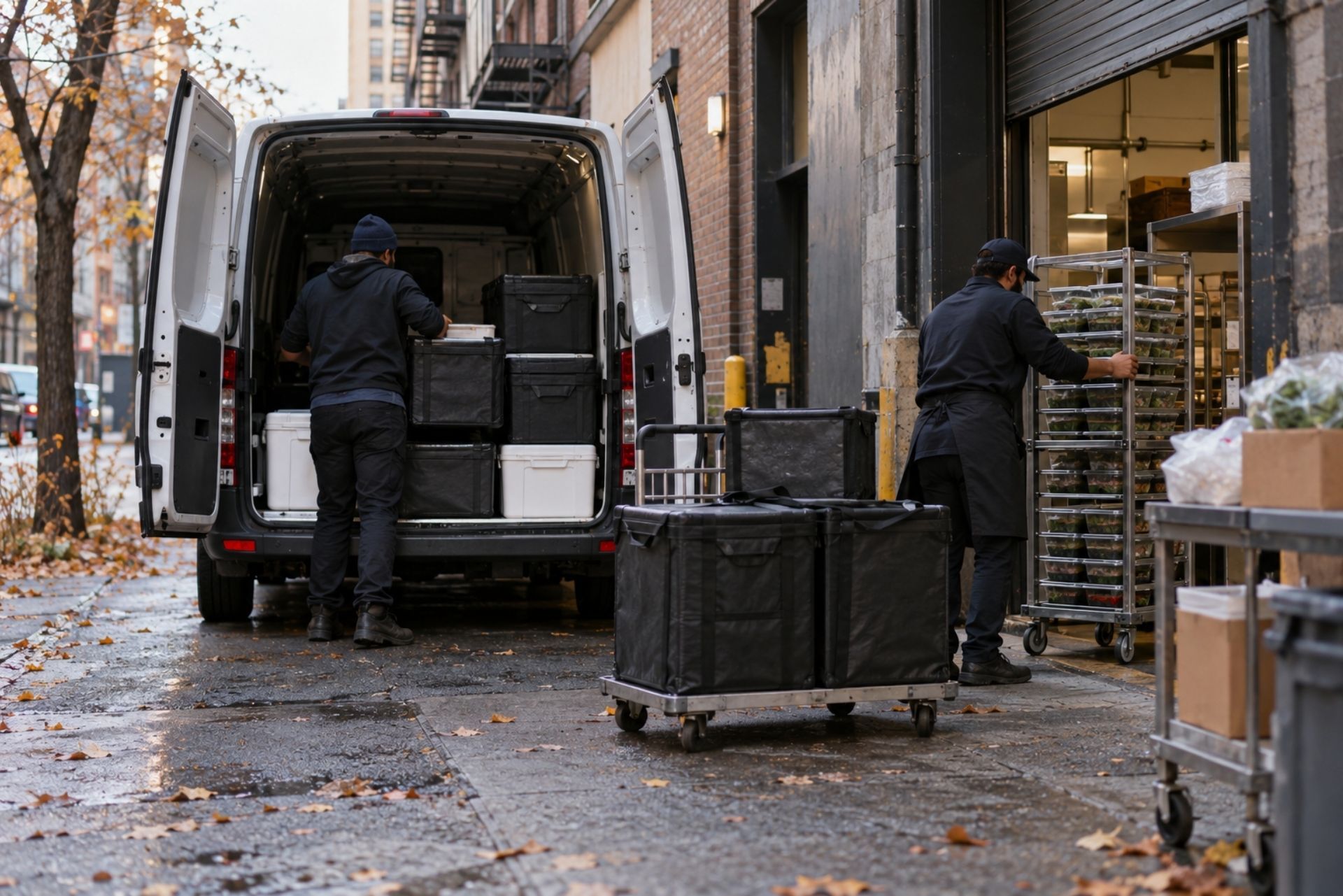
If your company owns or leases vehicles for meal delivery, you need commercial auto insurance. Personal auto policies won't cover accidents that happen during business use, and New York's minimum liability limits for commercial vehicles are higher than personal minimums (https://www.dfs.ny.gov/faqs/consumer-auto/how-much-auto-insurance-must-i-carry).
Your policy should include liability, collision, comprehensive, and uninsured/underinsured motorist coverage. If you use employees' personal cars for deliveries, a hired and non-owned auto endorsement on your business policy fills the gap. This is a common oversight for smaller meal prep companies that rely on staff vehicles rather than a branded fleet.
Protecting Your Kitchen and Equipment
Your kitchen is the engine of your business. Commercial ovens, blast chillers, vacuum sealers, and walk-in coolers represent tens of thousands of dollars in equipment. Protecting those assets requires more than a basic property policy.
Commercial Property vs. Inland Marine Coverage
Commercial property insurance covers your physical location: the building (if you own it), your equipment, furniture, and inventory stored at that address. If a fire destroys your kitchen, this policy pays to rebuild and replace.
Inland marine coverage fills a different gap. It protects equipment and goods in transit or stored at locations other than your primary address. If you deliver meals to corporate offices using insulated containers and a set of those containers gets stolen from a van, inland marine covers the loss. Meal prep companies that operate from multiple locations or transport expensive equipment between sites should carry both policies rather than relying on property insurance alone.
Spoilage and Equipment Breakdown Riders
Here's a coverage gap that catches many food businesses off guard: food spoilage coverage is not standard in most Business Owner's Policies and must be added as a separate endorsement. A power outage lasting 12 hours can destroy thousands of dollars in prepped meals, proteins, and fresh produce. Without a spoilage rider, you absorb that loss entirely.
Equipment breakdown coverage is the companion policy. Standard property insurance covers damage from external events like fires and storms, but it typically excludes mechanical or electrical failure. When your walk-in compressor dies on a Friday afternoon in July, equipment breakdown coverage pays for the repair and the spoiled inventory. Together, these two riders close the most common gap in food business property coverage.
Comparing Coverage Needs: Basic vs. Comprehensive
Not every meal prep company needs the same level of protection. A solo operator selling 50 meals per week from a rented commissary has different exposure than a company running three kitchens with a fleet of delivery vans and an online ordering platform.
Comparison Chart: Liability and Property Limits
| Coverage Type | Basic Package | Comprehensive Package |
|---|---|---|
| General Liability | $1M per occurrence / $2M aggregate | $2M per occurrence / $4M aggregate |
| Product Liability | Included in GL (standard limits) | Higher sub-limits; broader contamination coverage |
| Commercial Property | Building + equipment at one location | Multiple locations + business interruption |
| Spoilage Rider | Often omitted | Included with higher inventory limit |
| Equipment Breakdown | Often omitted | Included |
| Commercial Auto | State minimum liability only | Full coverage with hired/non-owned auto |
| Cyber Insurance | Not included | Included (data breach + business interruption) |
| Umbrella Policy | Not included | $1M-$5M excess liability |
A basic package works for startups testing the market, but it leaves significant gaps. The comprehensive approach costs more upfront but prevents catastrophic out-of-pocket expenses after a major claim. Most meal prep companies that have been operating for more than a year and employ staff should aim for something closer to the comprehensive column.
Managing Risks Specific to Meal Prep Operations
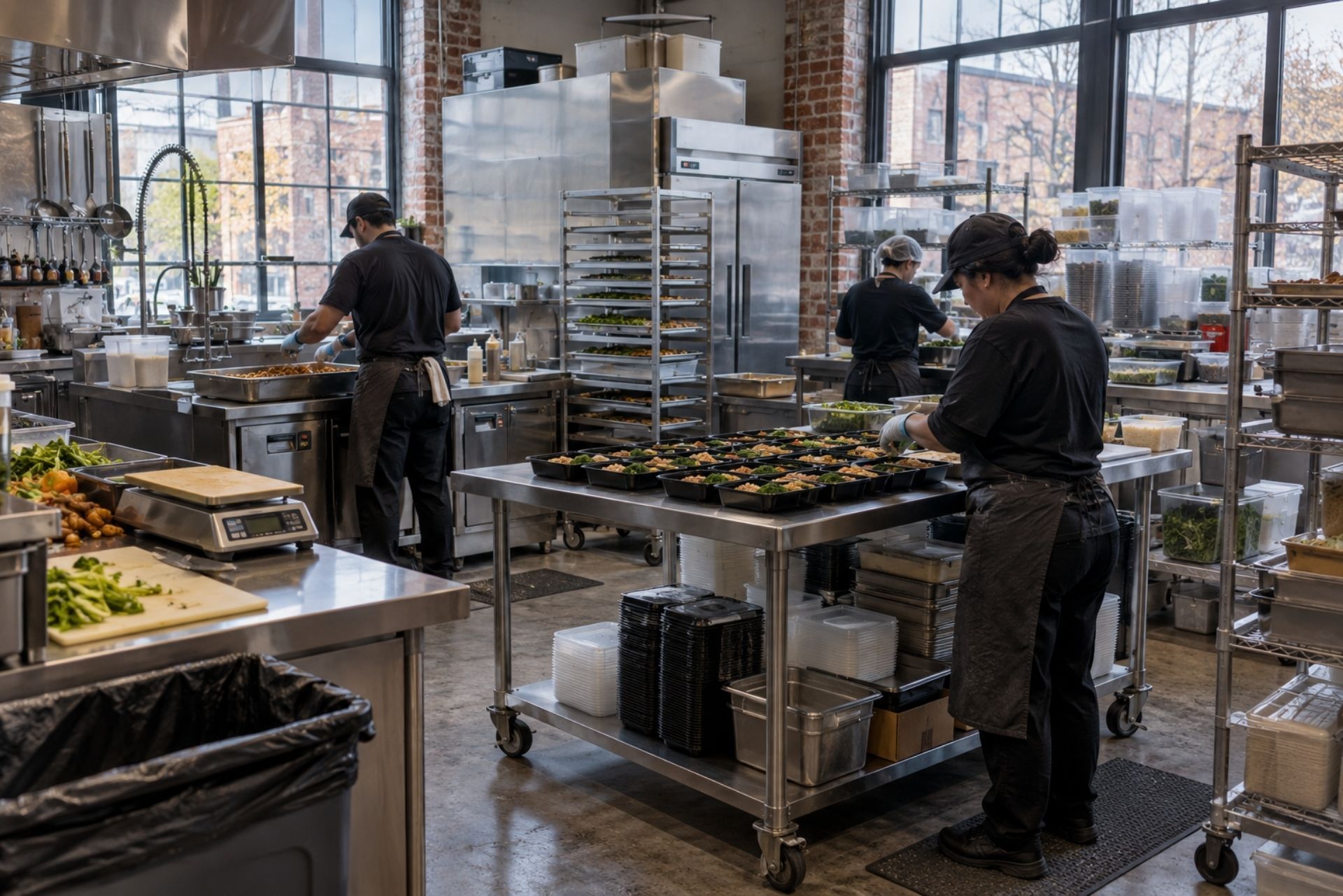
Meal preparation companies face risks that don't apply to a typical restaurant. You're taking online orders, storing customer payment data, shipping perishable goods across the city, and possibly including alcohol in certain meal kits. Each of these activities creates a distinct insurance need.
Cyber Insurance for Online Ordering Platforms
If customers place orders through your website or app, you're collecting names, addresses, email addresses, and credit card numbers. A data breach exposes you to notification costs, credit monitoring for affected customers, regulatory fines, and lawsuits. Cyber insurance covers these expenses along with business interruption losses if your ordering platform goes down due to a cyberattack.
In 2026, cyber insurance carriers have moved to a rigorous audit model. Businesses that fail to implement multi-factor authentication (MFA) now face premium hikes of 30% to 60% or outright coverage denial. Before you apply for a cyber policy, make sure your ordering platform uses MFA, encrypts stored payment data, and maintains regular security patches. Carriers will ask about all of this during underwriting.
Liquor Liability for Meal Kits with Alcohol
Some meal prep companies include wine pairings or cocktail kits with their deliveries. If you're selling or distributing alcohol in any form, you need liquor liability insurance. New York's liquor laws hold sellers responsible if an intoxicated person causes harm after consuming alcohol you provided.
This is a niche coverage, and not every insurer offers it for meal kit companies. If alcohol is part of your product line, discuss it specifically with your broker. Leaving it off your policy while including a bottle of wine in your premium dinner kit is a gap that could result in an uninsured claim.
Common Questions About Meal Prep Insurance
FAQ: Cost, Coverage, and New York Mandates
How much does insurance cost for a small meal prep company in New York? Costs vary based on revenue, number of employees, delivery operations, and location within the state. NYC-based companies typically pay higher premiums than those upstate due to greater litigation risk and higher property values. Get quotes from at least three brokers who specialize in food businesses.
Is workers' compensation required if I only have one part-time employee? Yes. New York requires workers' compensation coverage for businesses with even one employee, regardless of whether they're full-time or part-time. Fines for non-compliance accumulate quickly.
Do I need a separate policy for each type of coverage? Not necessarily. A Business Owner's Policy (BOP) bundles general liability and commercial property into one policy, often at a lower combined premium. You'll still need separate policies for workers' comp, commercial auto, and cyber insurance.
What's the difference between a BOP and a commercial umbrella policy? A BOP bundles your base coverages. An umbrella policy sits on top of your existing policies and provides extra liability limits beyond what your GL, auto, or employers' liability policies pay. It kicks in after your primary policy limits are exhausted.
Does my home kitchen qualify for commercial property coverage? Most home-based meal prep operations can't get a standard commercial property policy for a residential kitchen. You may need a home business endorsement on your homeowner's policy or a separate inland marine policy for your equipment.
Can I be denied cyber insurance in 2026? Yes. Carriers are now denying coverage to businesses that lack basic cybersecurity controls like MFA and endpoint detection. Implement these before applying.
Making the Right Choice for Your Kitchen
The insurance needs of a New York meal preparation company aren't one-size-fits-all, but certain coverages are non-negotiable. Workers' compensation is a legal mandate. General and product liability protect you from the lawsuits that can bankrupt a food business. Commercial property and spoilage riders safeguard the physical assets you depend on every day.
Beyond the basics, your specific operations dictate what else you need. Online ordering means cyber insurance. Delivery vehicles mean commercial auto. Alcohol in your meal kits means liquor liability. Each coverage fills a gap that, left open, could cost you far more than the annual premium.
Start by talking to a broker who understands New York's food industry. Bring your revenue numbers, employee count, delivery model, and a list of every location where you prep, store, or deliver food. A good broker will build a program around your actual risk profile rather than selling you a generic package. The goal isn't to buy every policy available: it's to make sure no single event can take your kitchen out of business.
ABOUT THE AUTHOR:
JELANI FENTON
As Owner of EG Bowman, I’m dedicated to continuing a legacy of trust and excellence built over more than seven decades. My focus is on helping businesses and individuals secure reliable, forward-thinking insurance solutions that protect their assets and support long-term growth.
Contact Us
OUR SERVICES
New York Business Insurance Coverage
General Liability Insurance


Workers Comp Insurance
Commercial Property Insurance
Commercial Auto Insurance
Commercial Umbrella Insurance
Business Owner's Policy
OUR SERVICES
New York Personal Insurance Coverage
Auto Insurance
Get coverage for your car and protect yourself on the road. We provide options for accidents, damages, and more.
Home Insurance
Protect your home and belongings with coverage for damages, theft, and unexpected events.
Umbrella Insurance
Extend your coverage with umbrella insurance for extra protection when you need it most.
Condo Insurance
Get peace of mind with condo insurance that protects your space and personal belongings.
NEW YORK BUSINESSES WE WORK WITH
Industries We Serve In New York
Electrician Insurance
Get coverage that protects electricians from accidents, property damage, and liability risks. Keep your tools, equipment, and business safe with plans designed for your needs. Request a quote to stay covered and focused on your work.
Real Estate Developer Insurance
Protect your projects with insurance that covers construction risks, liability, and property damage. We offer plans to keep your developments secure and on track. Get a quote to ensure your business is protected.
Wholesaler and Distributor Insurance
Protect your inventory and business operations with insurance that covers property damage and liability risks. Keep your supply chain running without disruptions. Get a quote to safeguard your business today.
What is an independent insurance agency, and how does it differ from a traditional insurance company?
An independent insurance agency works with multiple insurance carriers instead of just one. This allows us to provide customized coverage options tailored to your needs, rather than offering a one-size-fits-all policy. Independent agencies focus on finding the best value and coverage for their clients by comparing policies across various providers. At EG Bowman, we pride ourselves on offering personalized service and expertise to ensure our clients get the coverage that fits their specific needs.
What types of insurance does EG Bowman offer?
EG Bowman offers a wide range of insurance solutions, including commercial insurance, personal lines, property insurance, liability insurance, and specialized policies tailored to niche industries. Our focus is on protecting businesses and individuals from unforeseen risks. Whether you're looking for coverage for your home, car, or business, our team works to provide the most comprehensive and competitive options available. We’re here to make sure you’re prepared for the unexpected.
How does EG Bowman help businesses with insurance?
We specialize in understanding the unique risks businesses face and crafting insurance solutions to address them. From general liability to workers' compensation and industry-specific policies, our team ensures your business is protected at every level. We also provide risk management consultations to identify potential vulnerabilities and recommend solutions. With decades of experience, EG Bowman acts as a trusted partner, helping businesses navigate their insurance needs confidently.
Why should I choose EG Bowman as my insurance agency?
At EG Bowman, we combine decades of expertise with a client-focused approach to provide unparalleled service. Unlike larger, faceless companies, we build long-term relationships with our clients, offering personalized advice and solutions. We prioritize your needs, shop for the best rates, and advocate on your behalf when it comes to claims. Our goal is to be your trusted advisor in navigating insurance complexities and ensuring peace of mind.
How can I get a quote for insurance through EG Bowman?
Getting a quote with EG Bowman is simple and hassle-free. You can call us directly at 212-425-8150 or email us at info@egbowman.com to discuss your insurance needs. Our team will gather information about your situation and compare policies from multiple carriers to provide the best options. Whether it’s personal or business insurance, we ensure the process is transparent, efficient, and tailored to you.
Does EG Bowman offer insurance for small businesses?
Yes, EG Bowman specializes in working with small businesses. We understand the unique challenges small businesses face, from managing risks to staying within budget. Our insurance solutions cover everything from general liability to property insurance and more. By tailoring policies to fit your specific needs, we ensure your small business is well-protected while keeping costs manageable.
FAQS PAGE
Frequently Asked Questions
We understand you may have questions about our insurance services and how we can help protect what matters most to you. Below, you'll find answers to some of the most common questions we receive. If you don’t see the information you’re looking for, feel free to reach out to us directly. Our team is here to assist you with personalized advice and solutions.
NEWS & BLOG
Explore Our New York Insurance Blog

Contact Us