Most Common Business Policies
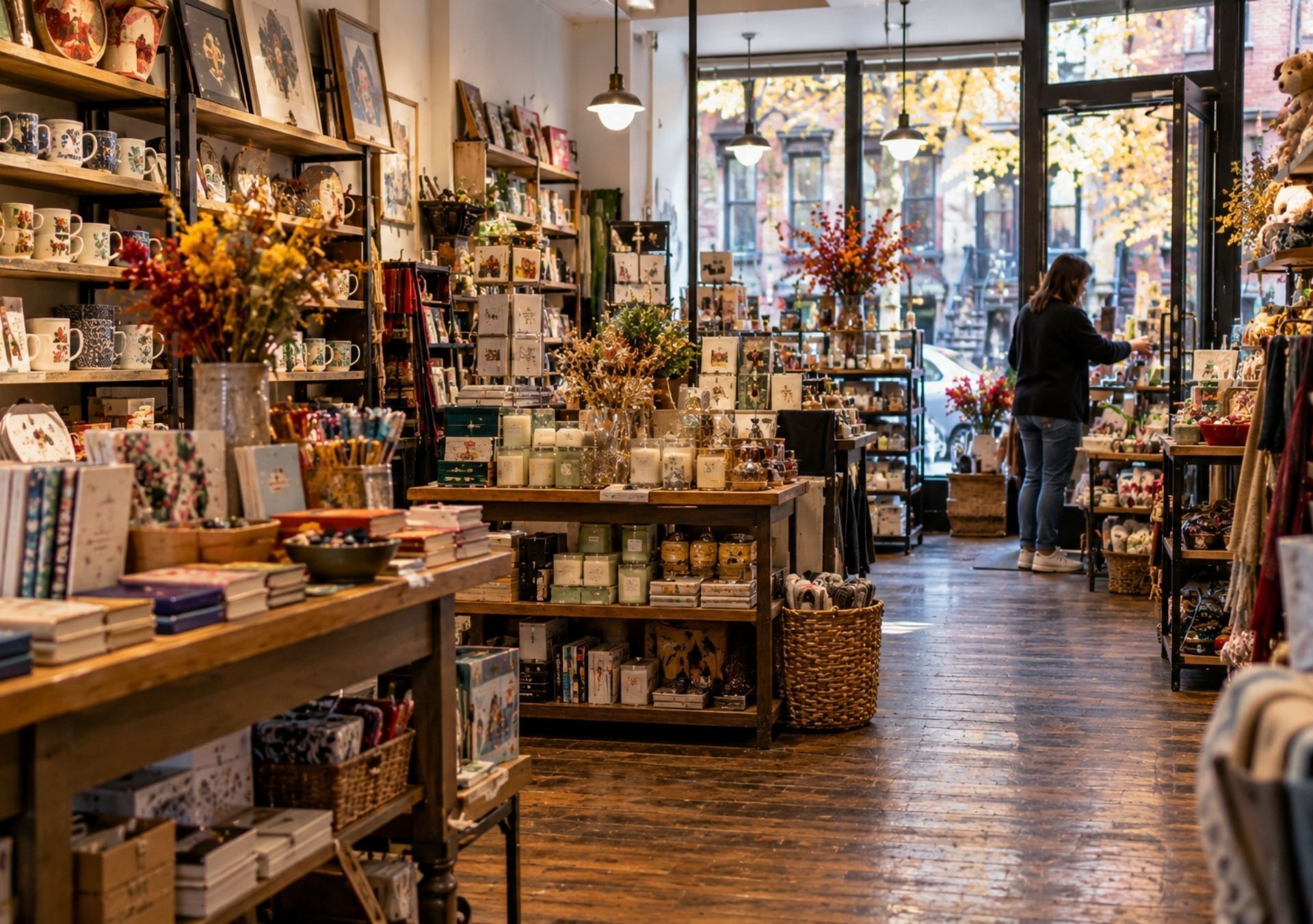
A single slip-and-fall claim from a tourist browsing your SoHo candle display can cost more than your entire holiday inventory. A burst pipe in January could destroy thousands of dollars in handmade ceramics overnight. Running a gift shop in New York means dealing with foot traffic, fragile merchandise, seasonal rushes, and a legal environment that doesn't go easy on small business owners. Understanding what insurance a New York gift shop needs, from liability and property coverage to workers' compensation and cyber protection, isn't optional. It's the difference between weathering a bad month and closing your doors for good.
New York State imposes specific mandates on employers, and the city itself carries risk factors that push premiums higher than most of the country. Whether you're operating a boutique in Brooklyn or a souvenir shop near Times Square, the right mix of policies protects your livelihood and keeps you compliant. This guide breaks down the essential coverages, what the state actually requires, and where gift shop owners commonly leave gaps in their protection.
Core Coverage for New York Retailers
Every retail business in New York shares a baseline of risk. Customers walk through your door, handle your products, and interact with your staff. The insurance policies below form the foundation that keeps your shop protected against the most common and costly claims.
General Liability for Customer Safety
General liability insurance is the first policy most gift shop owners purchase, and for good reason. It covers bodily injury, property damage, and personal injury claims from third parties, typically customers or delivery workers who get hurt on your premises. Think of the shopper who trips over a display stand or the child who cuts a hand on a broken ornament. These claims happen more often than you'd expect in a retail setting.
New York gift shops typically pay between $45 and $65 per month for standalone general liability insurance. That said, if your shop is in Manhattan or another high-traffic NYC borough, expect premiums to be higher than upstate locations. The density of foot traffic and the litigation-friendly court system in the city drive those costs up. Most policies start at $1 million per occurrence and $2 million aggregate, which is the standard minimum landlords and lease agreements require.
Commercial Property for Inventory and Displays
Your inventory is your income. Commercial property insurance covers the physical assets inside your shop: merchandise, display fixtures, signage, point-of-sale equipment, and sometimes improvements you've made to a leased space. A fire, burst pipe, or act of vandalism can wipe out stock that took months to curate.
One thing to keep in mind: standard commercial property policies don't cover floods. If your shop sits in a flood-prone zone, and many ground-floor NYC retail spaces do, you'll need a separate flood policy through the National Flood Insurance Program or a private insurer. Also review whether your policy covers replacement cost or actual cash value. Replacement cost pays to restock at current prices, while actual cash value depreciates your inventory, often leaving you short.
The Business Owner's Policy (BOP) Advantage
A Business Owner's Policy bundles general liability and commercial property coverage into a single package, usually at a lower premium than buying each separately. For a small gift shop with modest revenue, a BOP is often the most cost-effective starting point. Most insurers tailor BOPs for businesses with fewer than 100 employees and under $5 million in annual revenue, which fits the profile of nearly every independent gift shop.
BOPs typically include business interruption coverage as well. If a covered event forces you to close temporarily, this portion reimburses lost income and ongoing expenses like rent. For a seasonal business that depends on holiday traffic, even two weeks of forced closure can be devastating. The BOP won't cover everything, but it gives you a strong base to build on.

New York State Legal Requirements
New York doesn't leave insurance decisions entirely up to business owners. The state mandates several coverages for employers, and failing to carry them can result in fines, criminal penalties, and personal liability for the business owner.
Workers' Compensation Compliance
If you have even one employee, New York requires workers' compensation insurance. There are no exceptions based on business size or the number of hours an employee works. This policy covers medical expenses, lost wages, and rehabilitation costs when an employee is injured on the job. In a gift shop, common claims involve back injuries from lifting boxes, slips on wet floors, and repetitive strain from stocking shelves.
Here's some welcome news for 2026: New York approved a 21.9% reduction in workers' compensation loss cost rates effective October 1, 2026. That translates to real savings for small retailers. Your actual premium depends on your payroll, classification code, and claims history, but this rate reduction should lower costs noticeably. Operating without workers' comp in New York is a misdemeanor for the first offense and a felony for repeat violations, so this isn't a policy to skip.
Disability and Paid Family Leave Insurance
New York also mandates short-term disability benefits (DBL) and Paid Family Leave (PFL) coverage for employees. DBL provides partial wage replacement when an employee can't work due to a non-work-related illness or injury. Employers fund this through a policy that costs between $40 and $120 per employee annually.
PFL allows employees to take paid time off to bond with a new child, care for a seriously ill family member, or assist when a family member is deployed. For 2026, the employee contribution rate is set at 0.432% of gross wages, deducted directly from paychecks. You're responsible for securing the policy, but employees fund the PFL premiums. Many insurers bundle DBL and PFL together, simplifying administration for small shop owners.
Specialized Protection for Unique Gift Shop Risks
Beyond the basics, gift shops face risks that general policies don't always cover. The products you sell and the technology you use both create exposure that deserves specific attention.
Product Liability for Specialty Goods
Gift shops stock an eclectic mix: imported ceramics, scented candles, handmade jewelry, children's toys, artisan food items. Each category carries its own product liability risk. A candle that causes a house fire, a toy with small parts that injures a child, or a food product that triggers an allergic reaction can all lead to lawsuits naming your shop as a defendant, even if you didn't manufacture the item.
Product liability coverage protects you when a product you sold causes harm. Some general liability policies include limited product liability, but if you carry artisan goods, imported items without U.S. safety certifications, or consumable products, you should verify your limits. Ask your insurer specifically about coverage for imported goods, because some policies exclude products manufactured outside the U.S. Keep records of your suppliers, including certificates of insurance and safety documentation, to strengthen your defense if a claim arises.
Cyber Insurance for Point-of-Sale Systems
If your shop accepts credit cards, you're handling sensitive customer data. A breach at your point-of-sale terminal can expose card numbers and trigger costly notification requirements, fines from payment processors, and lawsuits. Small businesses increasingly rely on digital tools for sales, inventory, and customer management, and cyber protection is becoming a standard part of running any business, not just tech companies.
New York's DFS Part 500 regulations apply to businesses handling financial data. Small businesses must
implement multi-factor authentication and conduct annual risk assessments to stay compliant. A cyber insurance policy covers breach response costs, credit monitoring for affected customers, legal defense, and regulatory fines. While basic data breach add-ons can cost as little as $320 per year, standalone cyber insurance for a small business with $500k–$2M in revenue
typically ranges from $1,200 to $3,000 annually, but the cost of an uninsured breach can run into six figures when you factor in PCI fines and lost customer trust.

Comparing Coverage Needs
Table: Basic vs. Comprehensive Gift Shop Protection
Not every gift shop needs the same level of coverage. A solo-owner kiosk with no employees has different requirements than a multi-location shop with a delivery van and ten staff members. This comparison highlights the gap between minimum and recommended protection.
| Coverage Type | Basic (Sole Owner, No Employees) | Comprehensive (Employees, Delivery, E-Commerce) |
|---|---|---|
| General Liability | Required by most leases; $1M/$2M limits | Higher limits; umbrella policy recommended |
| Commercial Property | Covers inventory and fixtures | Includes flood, equipment breakdow |
| Workers' Comp | Not required if no employees | Mandatory for all employees in NY |
| DBL/PFL | Not required if no employees | Mandatory; bundled policy recommended |
| Product Liability | Included in GL (verify limits) | Standalone policy for imported/artisan goods |
| Cyber Insurance | Optional but recommended if taking cards | Essential; DFS Part 500 compliance required |
| Commercial Auto | Not needed if no business vehicles | Required for delivery vehicles; NY minimums apply |
| Business Interruption | Included in BOP | Higher limits for seasonal revenue peaks |
If you operate a delivery vehicle, New York requires commercial auto insurance with minimum liability limits of $25,000/$50,000 for bodily injury and $10,000 for property damage, plus $50,000 in personal injury protection. Personal auto policies won't cover accidents that happen during business use.
Common Questions About Gift Shop Insurance
FAQ: Cost, Claims, and Local Requirements
How much does gift shop insurance cost in New York? A basic BOP for a small gift shop typically runs a few hundred dollars per month. NYC locations pay significantly more than upstate shops due to higher property values, foot traffic, and litigation risk. Your exact premium depends on revenue, location, inventory value, and claims history.
Do I need insurance if I'm the only person working in my shop? You won't need workers' comp, DBL, or PFL if you have zero employees. But general liability and commercial property coverage are still essential, and most commercial leases require them. A single customer injury claim can exceed $100,000 in legal costs alone.
Does my landlord's insurance cover my inventory? No. Your landlord's policy covers the building structure, not your merchandise, fixtures, or improvements. You need your own commercial property policy or BOP to protect what's inside your space.
What's the most common claim for gift shops? Slip-and-fall injuries top the list, followed by product liability claims and property damage from water or fire. During the holiday season, overcrowded aisles and temporary displays increase the risk of customer injuries.
Can I bundle all my coverage into one policy? A BOP covers general liability and property, and you can often add endorsements for product liability and business interruption. Workers' comp, cyber, and commercial auto are typically separate policies. Working with a broker who understands retail lets you coordinate everything efficiently.
Getting the right insurance for your New York gift shop starts with an honest assessment of your risks. Count your employees, estimate your inventory value, list the product categories you carry, and note whether you use delivery vehicles or process credit card payments. Each of these factors shapes your coverage needs.
Start with a BOP as your foundation, then layer on workers' comp, DBL/PFL, and any specialized policies your operation requires. Request quotes from at least three insurers or work with an independent broker who can shop the market on your behalf. Review your policies annually, especially before the holiday season when your inventory peaks and foot traffic surges.
The 2026 workers' comp rate reduction is a real opportunity to lock in lower premiums. Don't wait for a claim to discover a gap in your coverage. Reach out to a licensed New York commercial insurance broker this week and get a policy review on the books. Your shop, your staff, and your peace of mind are worth the call.
ABOUT THE AUTHOR:
JELANI FENTON
As Owner of EG Bowman, I’m dedicated to continuing a legacy of trust and excellence built over more than seven decades. My focus is on helping businesses and individuals secure reliable, forward-thinking insurance solutions that protect their assets and support long-term growth.
Contact Us
OUR SERVICES
New York Business Insurance Coverage
General Liability Insurance


Workers Comp Insurance
Commercial Property Insurance
Commercial Auto Insurance
Commercial Umbrella Insurance
Business Owner's Policy
OUR SERVICES
New York Personal Insurance Coverage
Auto Insurance
Get coverage for your car and protect yourself on the road. We provide options for accidents, damages, and more.
Home Insurance
Protect your home and belongings with coverage for damages, theft, and unexpected events.
Umbrella Insurance
Extend your coverage with umbrella insurance for extra protection when you need it most.
Condo Insurance
Get peace of mind with condo insurance that protects your space and personal belongings.
NEW YORK BUSINESSES WE WORK WITH
Industries We Serve In New York
Electrician Insurance
Get coverage that protects electricians from accidents, property damage, and liability risks. Keep your tools, equipment, and business safe with plans designed for your needs. Request a quote to stay covered and focused on your work.
Real Estate Developer Insurance
Protect your projects with insurance that covers construction risks, liability, and property damage. We offer plans to keep your developments secure and on track. Get a quote to ensure your business is protected.
Wholesaler and Distributor Insurance
Protect your inventory and business operations with insurance that covers property damage and liability risks. Keep your supply chain running without disruptions. Get a quote to safeguard your business today.
What is an independent insurance agency, and how does it differ from a traditional insurance company?
An independent insurance agency works with multiple insurance carriers instead of just one. This allows us to provide customized coverage options tailored to your needs, rather than offering a one-size-fits-all policy. Independent agencies focus on finding the best value and coverage for their clients by comparing policies across various providers. At EG Bowman, we pride ourselves on offering personalized service and expertise to ensure our clients get the coverage that fits their specific needs.
What types of insurance does EG Bowman offer?
EG Bowman offers a wide range of insurance solutions, including commercial insurance, personal lines, property insurance, liability insurance, and specialized policies tailored to niche industries. Our focus is on protecting businesses and individuals from unforeseen risks. Whether you're looking for coverage for your home, car, or business, our team works to provide the most comprehensive and competitive options available. We’re here to make sure you’re prepared for the unexpected.
How does EG Bowman help businesses with insurance?
We specialize in understanding the unique risks businesses face and crafting insurance solutions to address them. From general liability to workers' compensation and industry-specific policies, our team ensures your business is protected at every level. We also provide risk management consultations to identify potential vulnerabilities and recommend solutions. With decades of experience, EG Bowman acts as a trusted partner, helping businesses navigate their insurance needs confidently.
Why should I choose EG Bowman as my insurance agency?
At EG Bowman, we combine decades of expertise with a client-focused approach to provide unparalleled service. Unlike larger, faceless companies, we build long-term relationships with our clients, offering personalized advice and solutions. We prioritize your needs, shop for the best rates, and advocate on your behalf when it comes to claims. Our goal is to be your trusted advisor in navigating insurance complexities and ensuring peace of mind.
How can I get a quote for insurance through EG Bowman?
Getting a quote with EG Bowman is simple and hassle-free. You can call us directly at 212-425-8150 or email us at info@egbowman.com to discuss your insurance needs. Our team will gather information about your situation and compare policies from multiple carriers to provide the best options. Whether it’s personal or business insurance, we ensure the process is transparent, efficient, and tailored to you.
Does EG Bowman offer insurance for small businesses?
Yes, EG Bowman specializes in working with small businesses. We understand the unique challenges small businesses face, from managing risks to staying within budget. Our insurance solutions cover everything from general liability to property insurance and more. By tailoring policies to fit your specific needs, we ensure your small business is well-protected while keeping costs manageable.
FAQS PAGE
Frequently Asked Questions
We understand you may have questions about our insurance services and how we can help protect what matters most to you. Below, you'll find answers to some of the most common questions we receive. If you don’t see the information you’re looking for, feel free to reach out to us directly. Our team is here to assist you with personalized advice and solutions.
NEWS & BLOG
Explore Our New York Insurance Blog



Contact Us