What NYC museum fine art insurance covers when a loan leaves the wall
See How We're Different
or call us: 212-425-8150
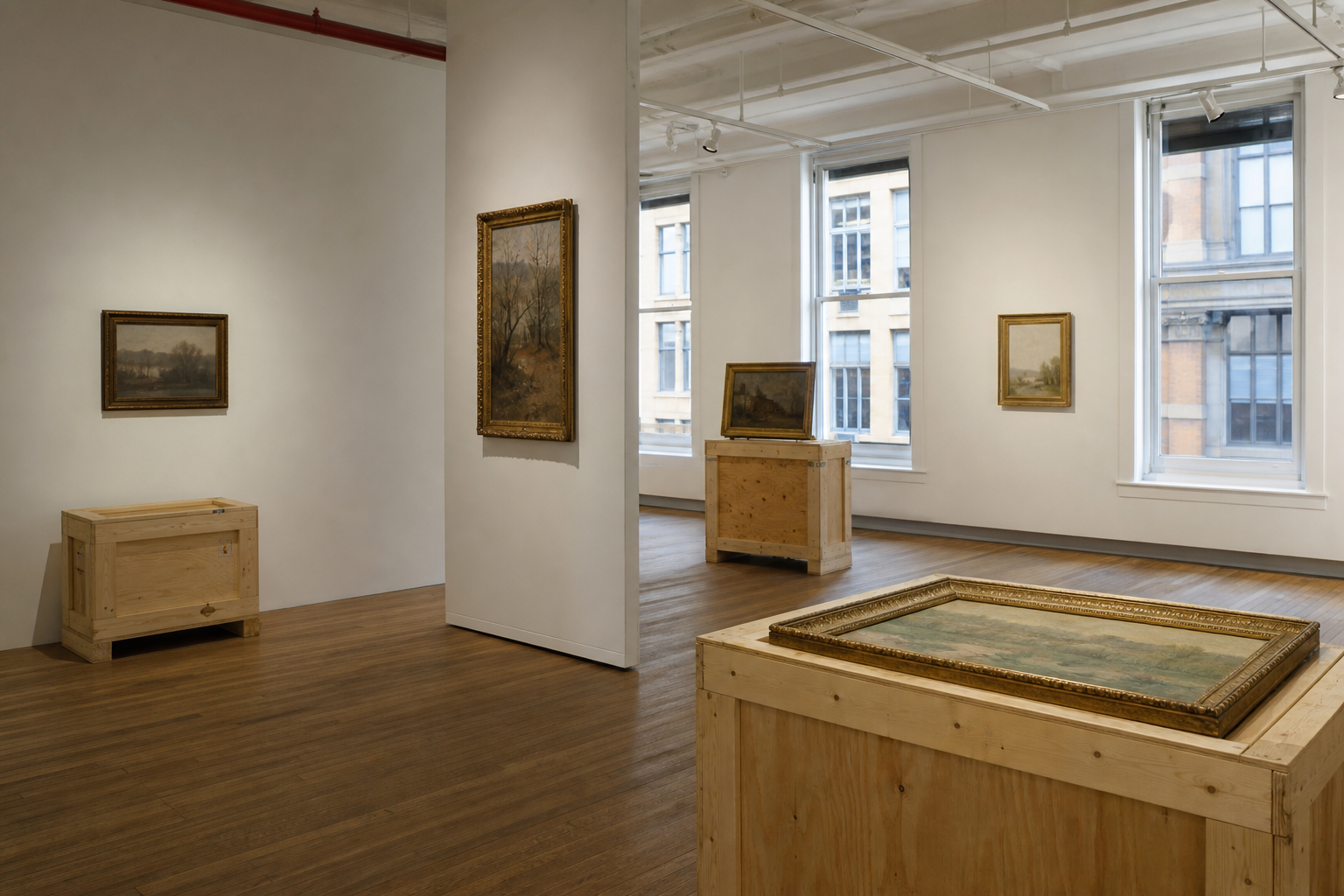
A crate leaves a Chelsea gallery on West 24th Street at seven in the morning. By noon it is on a wall in the Bronx, or Queens, or Brooklyn. Between those two moments sit the questions NYC museum fine art insurance is meant to answer.
Nothing about that trip is routine. A loan crosses bridges, elevators, loading docks, and a borough line. The object changes hands more than once before anyone hangs it.
Transit, wall, and storage: how NYC museum fine art insurance splits
Most conversations sort into three phases. Transit is the movement itself, including packing, the truck, and the crossing between a Chelsea gallery and a borough museum. Exhibition is the time on the wall or the pedestal, from install through deinstall. Storage covers the weeks before and after, in a basement vault or an offsite facility in Long Island City.
You will hear wall-to-wall and nail-to-nail used as shorthand for continuous cover across all three phases. Those are industry phrases, not policy forms. Ask what the actual wording says about each leg.
Ownership matters too. A borrowing museum often agrees to insure a lender's object. A lending gallery may carry its own. Two certificates naming the same painting can still leave a gap on the loading dock. Read the loan agreement and the insurance conversation side by side.
Where federal indemnity fits, and where it stops
Some traveling shows reach for federal help. Congress created the Arts and Artifacts Indemnity Program in 1975, and the National Endowment for the Arts administers it for the Federal Council on the Arts and the Humanities. The NEA indemnity program page explains the International and Domestic programs for eligible nonprofit museum exhibitions. This article will not quote dollar amounts.
The eligibility rules read like operations, not paperwork. Applicants must have already organized at least one exhibition with borrowed objects. The Council requires 24-hour, 7-day human presence inside buildings where indemnified objects are located. Each conveyance vehicle carrying them needs a courier on board. Indemnity should not be requested for an inaugural exhibition in a new or substantially renovated space.
Read that last point closely if your building just finished a renovation. And note the limit of the program itself: federal indemnity is not a substitute for commercial coverage on loans, transit, exhibition, and storage that do not qualify. Most day-to-day borrowing in this city stays a commercial conversation.
Get a free insurance review in Lower Manhattan
Bring the loan agreement, the condition reports, and the route between buildings. E.G. Bowman will walk through the transit, exhibition, and storage phases with you. It is not a price quote and it is not a binder.
Call 212-425-8150, email info@egbowman.com, or visit 5 Hanover Square, Suite 2103, New York, NY 10004. Start at https://www.egbowman.com.
This article is for education only. It is not a substitute for advice from a licensed insurance agent, and it is not legal, medical, or binding coverage advice.
Recent Post
Contact Information
Phone
212-425-8150
info@egbowman.com